
What Is a Hot Shot Trailer? Understanding Hot Shot Hauling and LTL Freight
Not every commercial load requires a semi-truck and 53-foot trailer. Contractors may need to move a skid steer to another jobsite, manufacturers may need several pallets delivered quickly, and equipment operators may need to transport machinery without waiting on a conventional freight schedule.
That is where hot shot hauling comes in.
Hot shot trucking uses heavy-duty pickups or medium-duty trucks paired with flatbed and equipment trailers to move machinery, construction materials, vehicles, agricultural equipment, industrial components, and other commercial freight. Hot shot trailers fill an important space between smaller utility hauling and full-scale tractor-trailer transportation.
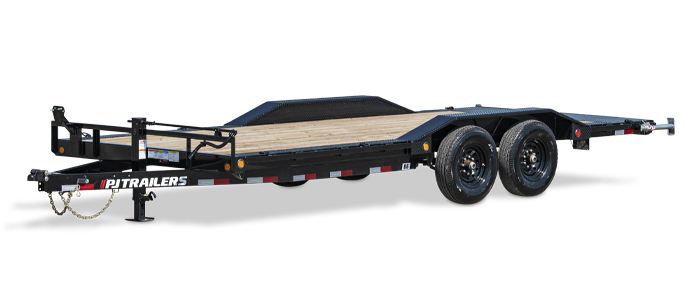
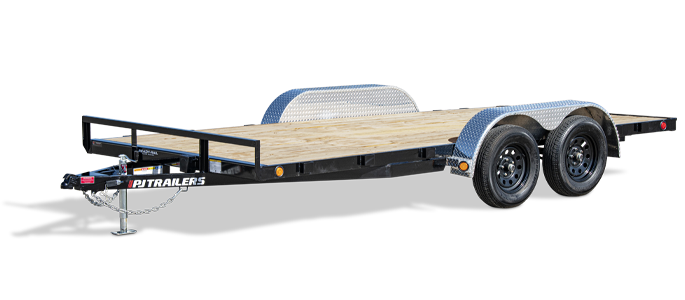
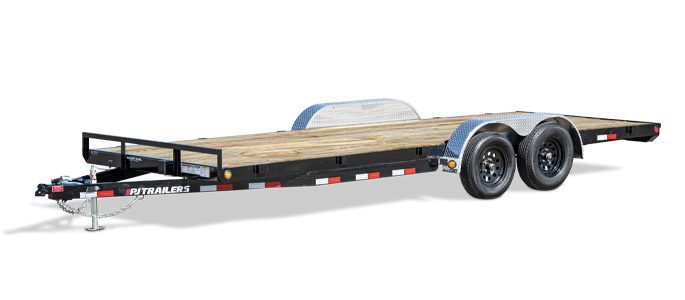
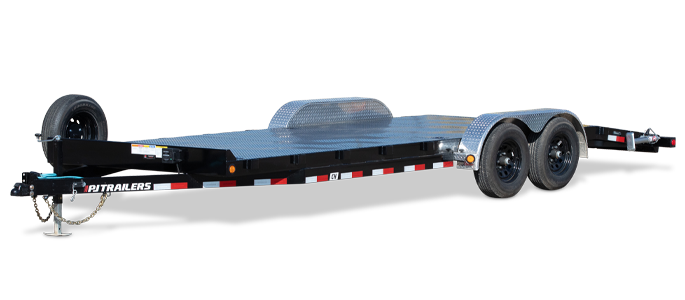
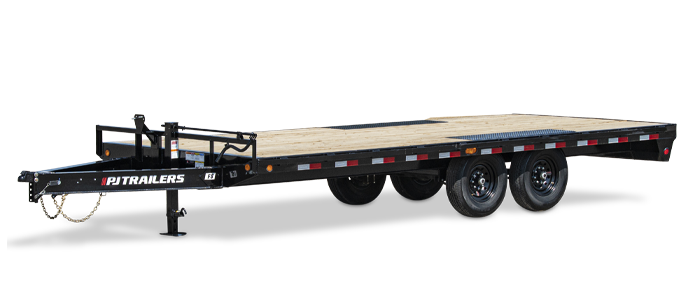
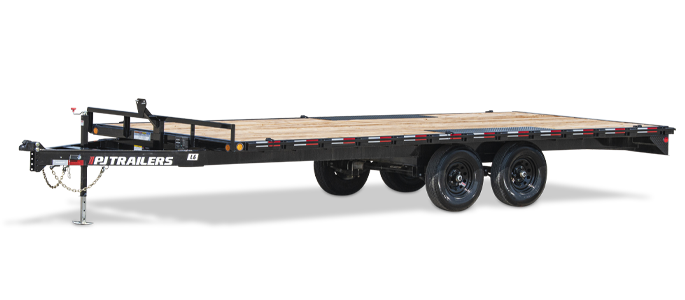
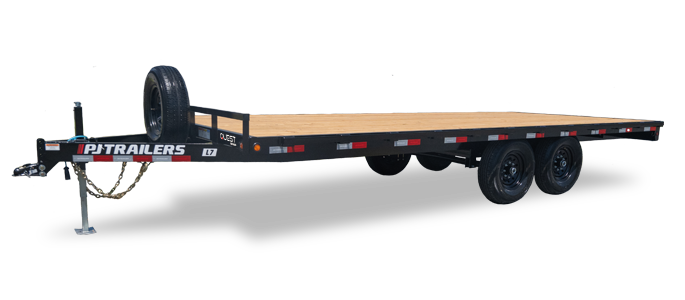
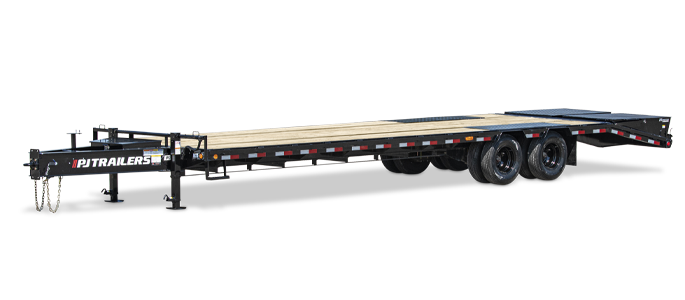
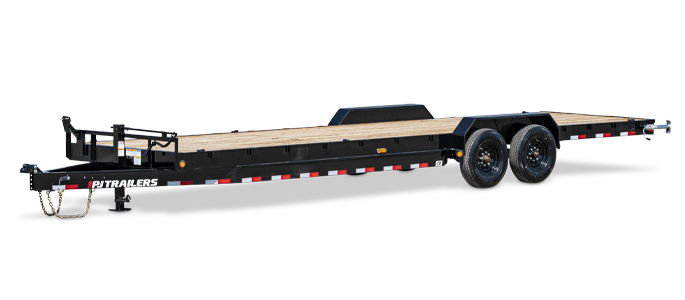
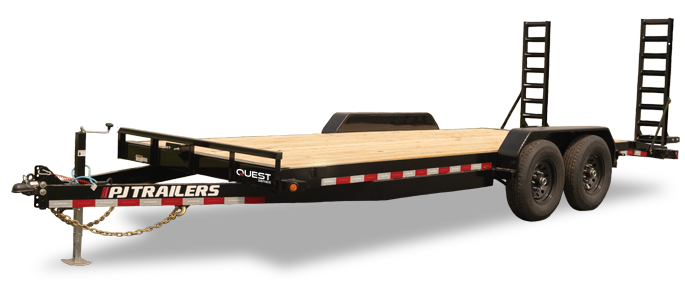
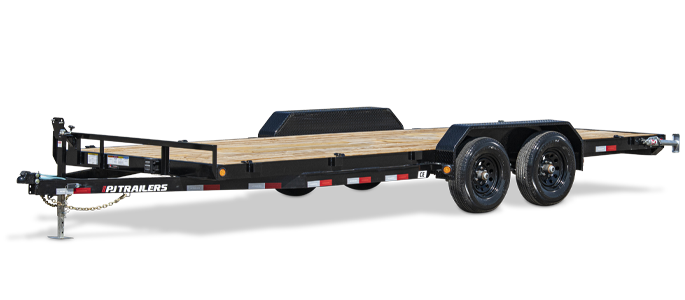
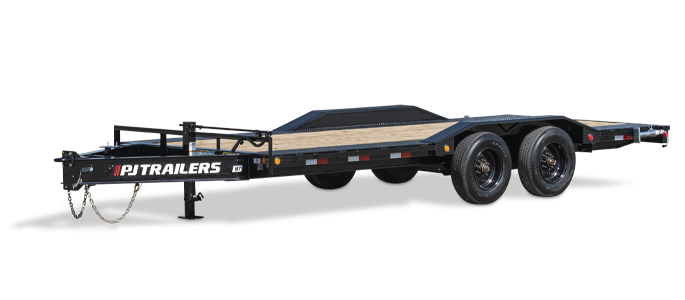
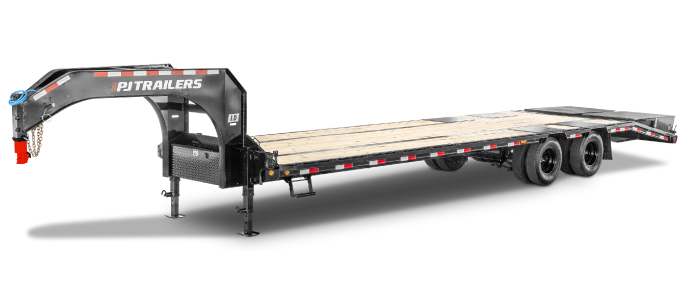
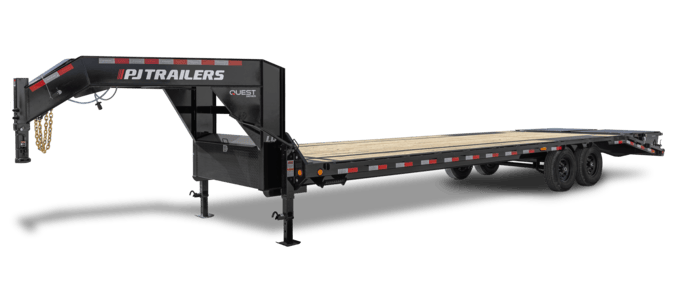
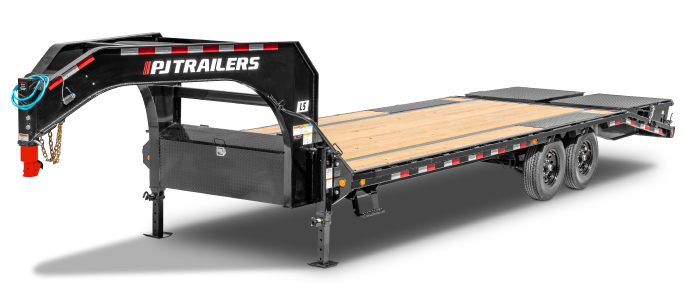
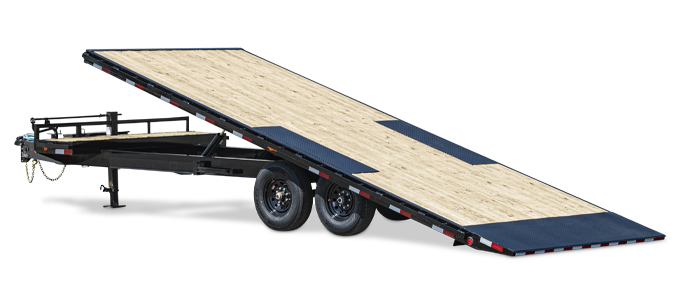
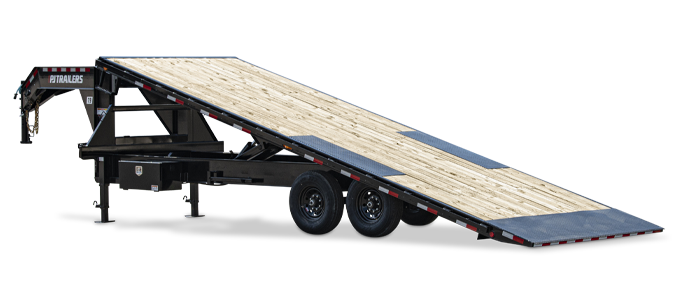
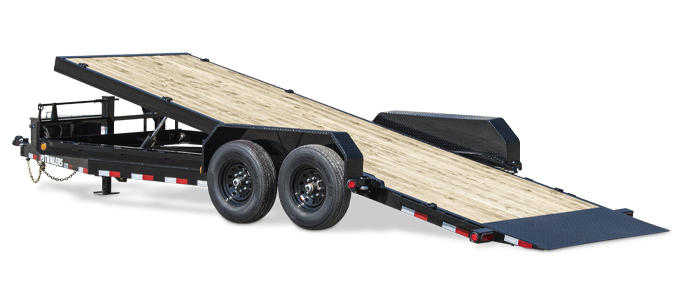
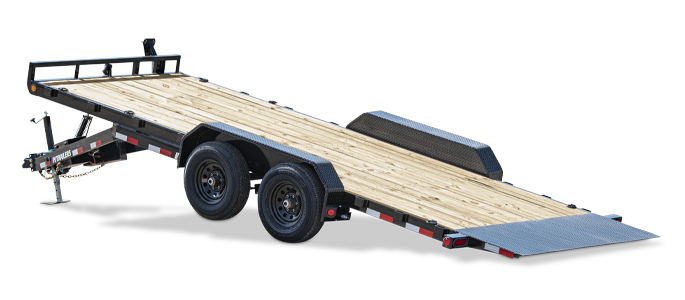
PJ Trailers builds several gooseneck deckover trailers that are well suited to this type of equipment and commercial hauling.
What Is a Hot Shot Trailer?
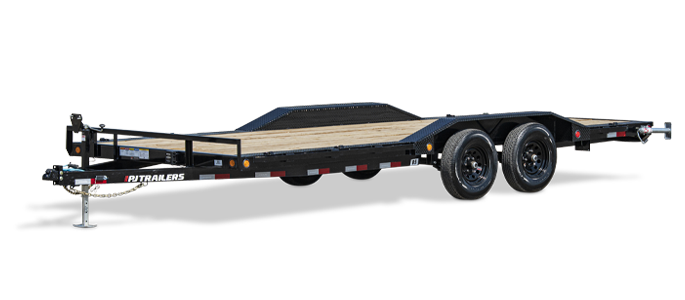
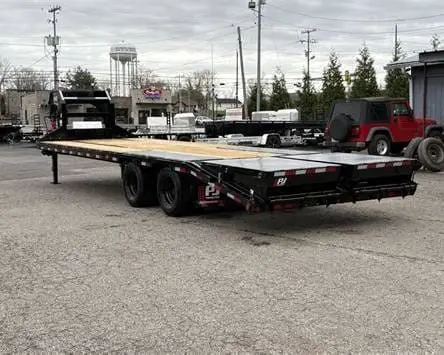
A hot shot trailer is generally a heavy-duty flatbed or equipment trailer pulled by a pickup or medium-duty truck for commercial hauling. Long gooseneck flatbeds are especially common because they provide substantial deck space while keeping the trailer connection in the truck bed rather than behind the bumper.
Hot shot trailers commonly transport construction equipment, agricultural machinery, vehicles, building materials, palletized freight, industrial components, oilfield equipment, and other regional or time-sensitive commercial loads.
An open flatbed also gives operators flexibility when loading. Depending on the cargo and trailer configuration, equipment or freight may be loaded from the rear, from the side with a forklift, or from above using a crane or telehandler.
PJ's gooseneck deckover lineup currently includes trailers ranging up to 44 feet long with several capacity and axle configurations.
How Hot Shot Hauling Fits Into LTL Freight
Hot shot hauling often serves a similar transportation need as less-than-truckload freight, or LTL.
LTL freight is simply a shipment that does not require an entire tractor-trailer. It could be several pallets, one machine, construction materials, a utility vehicle, or an industrial component.
Traditional LTL carriers commonly consolidate loads from several customers. Freight may move through terminals or distribution centers before reaching its final destination.
Hot shot hauling can be considerably more direct.
A hot shot operator may pick up a single load and transport it directly to a customer, construction site, farm, equipment yard, or industrial facility. That can reduce the number of transfers involved and make hot shot transportation especially useful for expedited loads.
For example, a construction company waiting for a replacement skid steer attachment may not want that component moving through multiple freight terminals. A hot shot operator may be able to pick it up and deliver it directly to the jobsite.
That direct-delivery capability is one of the major differences between hot shot hauling and conventional consolidated LTL transportation.
Why Gooseneck Trailers Are Popular for Hot Shot Hauling
Gooseneck flatbeds have become one of the most recognizable trailer configurations in professional hot shot trucking.
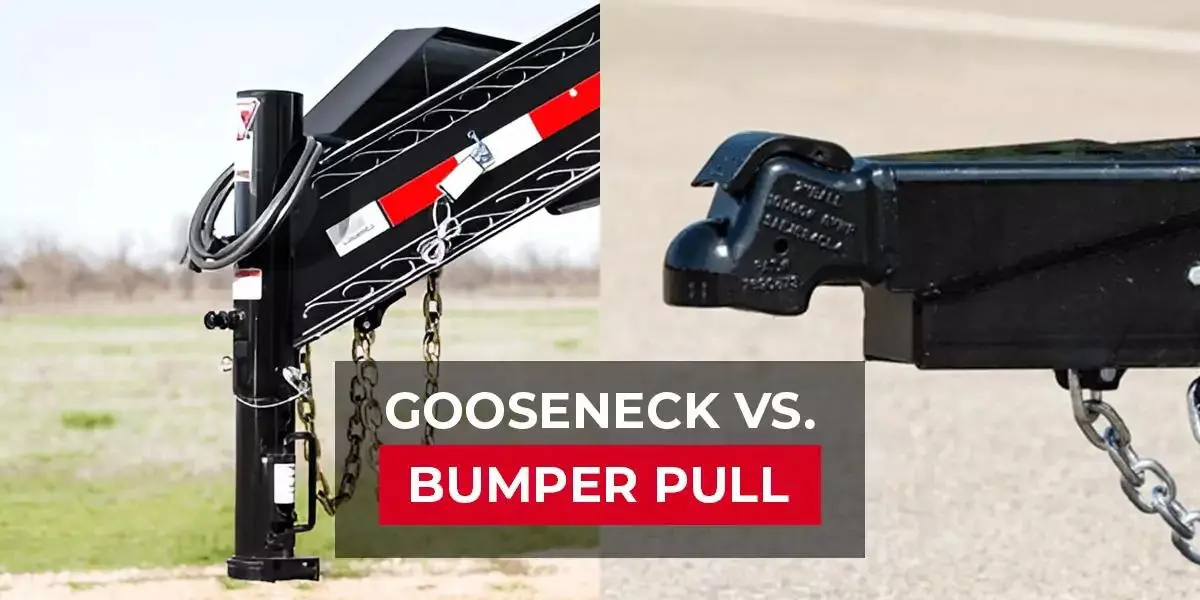
Instead of connecting to a receiver behind the rear bumper, a gooseneck connects to a hitch mounted inside the truck bed. That arrangement is well suited to the longer decks and heavier loads commonly encountered in commercial hauling.
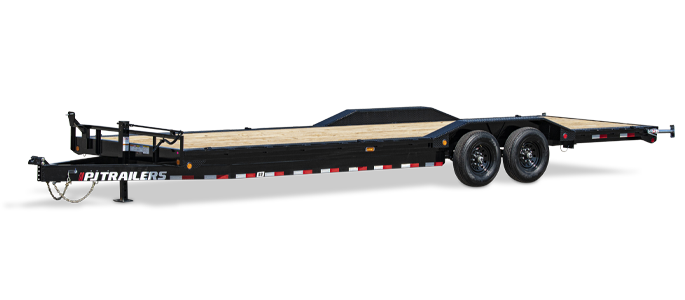
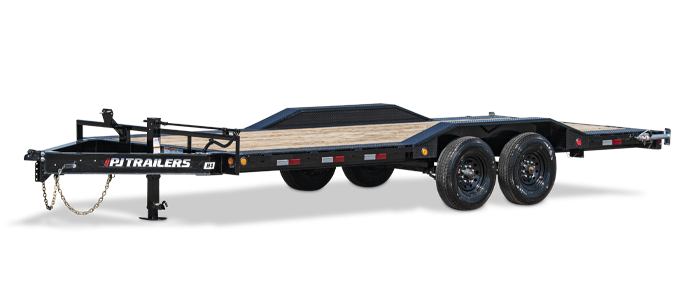
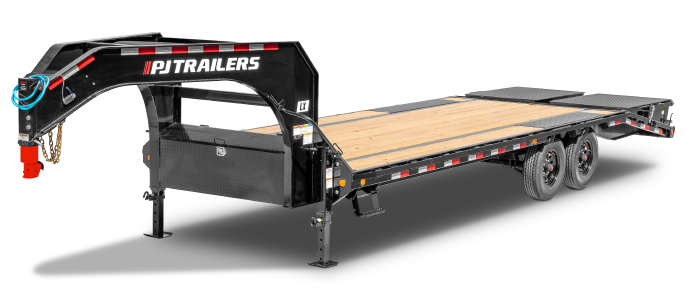
One of PJ's primary heavy-duty options is the Low-Pro Flatdeck With Duals (LD).
The LD has a 102-inch-wide deck, is available in lengths from 20 to 44 feet, and carries a standard 25,000-pound GVWR. Current standard configurations provide approximately 16,770 to 19,370 pounds of load capacity depending on trailer length.
For hot shot operators, the combination of a wide deck, long available lengths, and tandem-dual running gear makes this type of trailer useful for equipment, machinery, materials, vehicles, and other commercial cargo.
Why Low-Profile Trailers Matter
Deck height can make a significant difference when loading equipment.
A lower deck decreases the vertical distance a machine must travel from the ground to the trailer. That can reduce the loading angle and keep heavy cargo positioned closer to the road once it is secured.
That matters when transporting skid steers, tractors, lifts, vehicles, compact construction machinery, and other wheeled or tracked equipment.
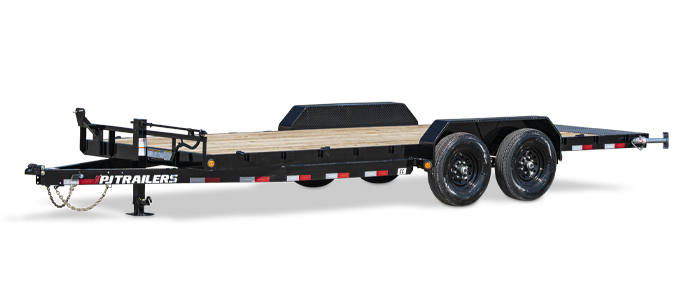
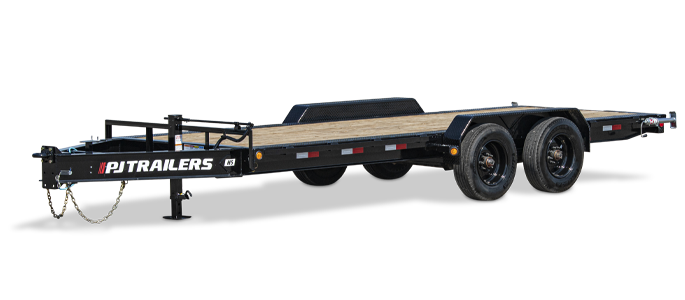
PJ also offers the Low-Pro Flatdeck With 8K Singles (LX). The LX provides a full 102-inch deck with a lighter single-wheel axle configuration than the tandem-dual LD.
PJ currently lists the LX in 20- to 40-foot lengths with a 17,500-pound GVWR and approximately 10,540 to 12,740 pounds of load capacity.
The right configuration depends heavily on the cargo. A freight hauler carrying pallets may prioritize usable deck length, while an equipment hauler may care more about deck height, ramp angle, suspension, and ease of loading.
Why Deckover Trailers Work Well for Hot Shot Freight
A deckover trailer places the main loading surface above the wheels.
That eliminates wheel wells from the primary deck and provides a relatively uninterrupted surface across the trailer's width.
For hot shot freight, that can be a major advantage. Pallets can be positioned more freely across the deck, wide machinery is easier to accommodate, and forklifts may be able to load cargo from the side.
It also makes the trailer adaptable to changing jobs.
An operator might transport building materials on Monday, machinery on Tuesday, palletized industrial components later in the week, and a vehicle or piece of farm equipment on the next load.
PJ specifically describes its gooseneck deckovers as trailers intended for large, wide, and heavy-duty equipment and cargo.
Loading Equipment on a Hot Shot Trailer
Loading method is another major consideration when selecting a hot shot trailer.
Palletized freight may be placed directly on the deck with a forklift, but wheeled and tracked machinery requires a practical transition between the ground and trailer.
Ramp length, dovetail design, deck height, machine wheelbase, ground clearance, and approach angle can all affect how easily equipment loads.
For operators who move machinery frequently, a hydraulic dovetail provides another option.
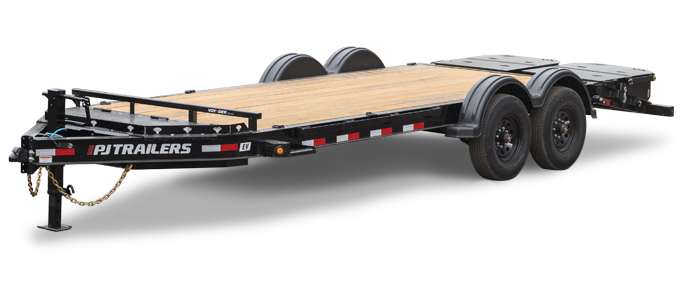
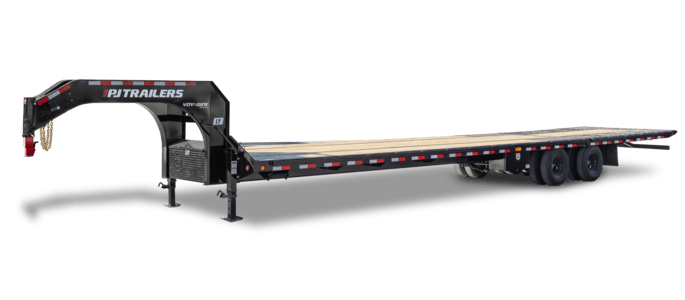
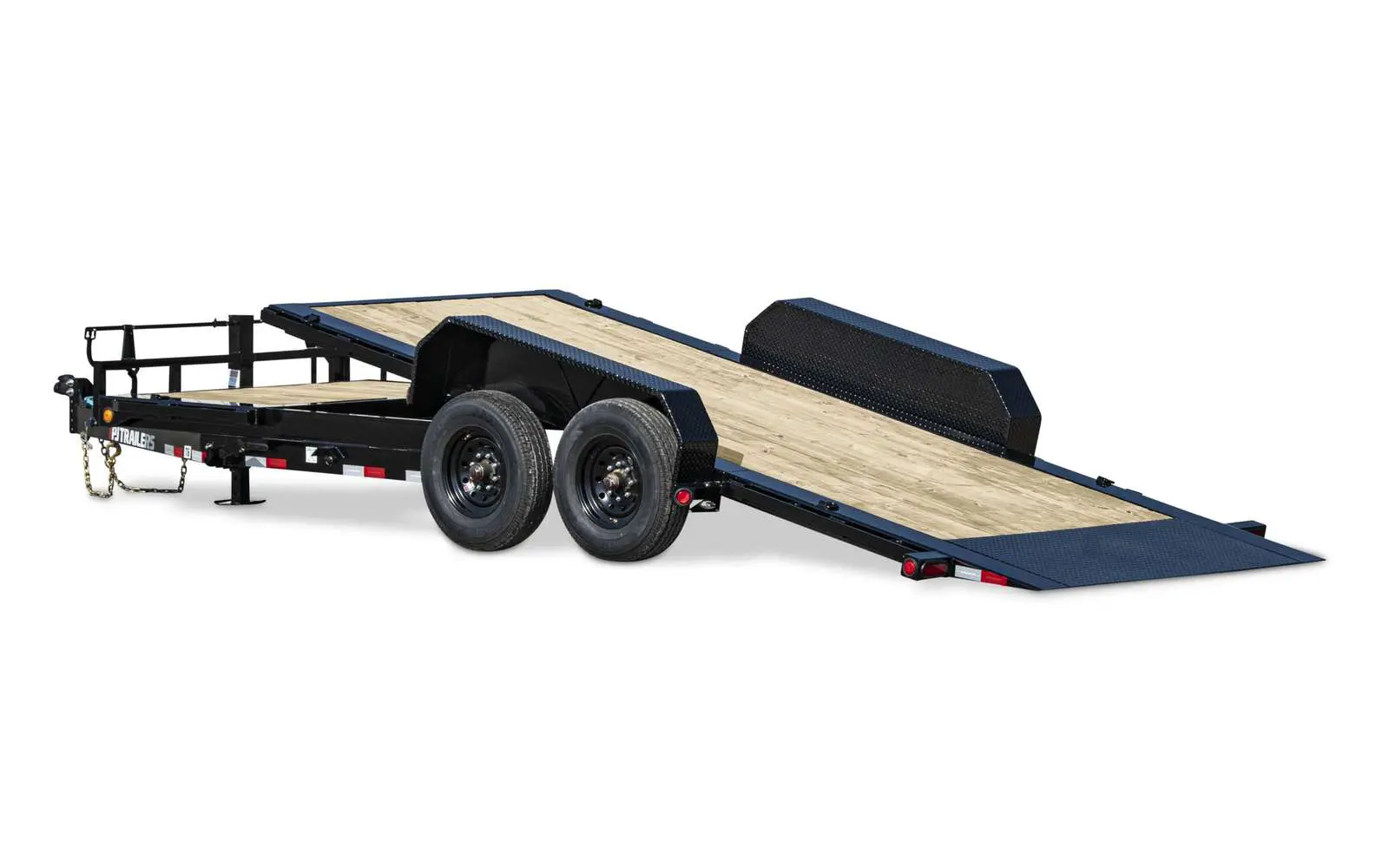
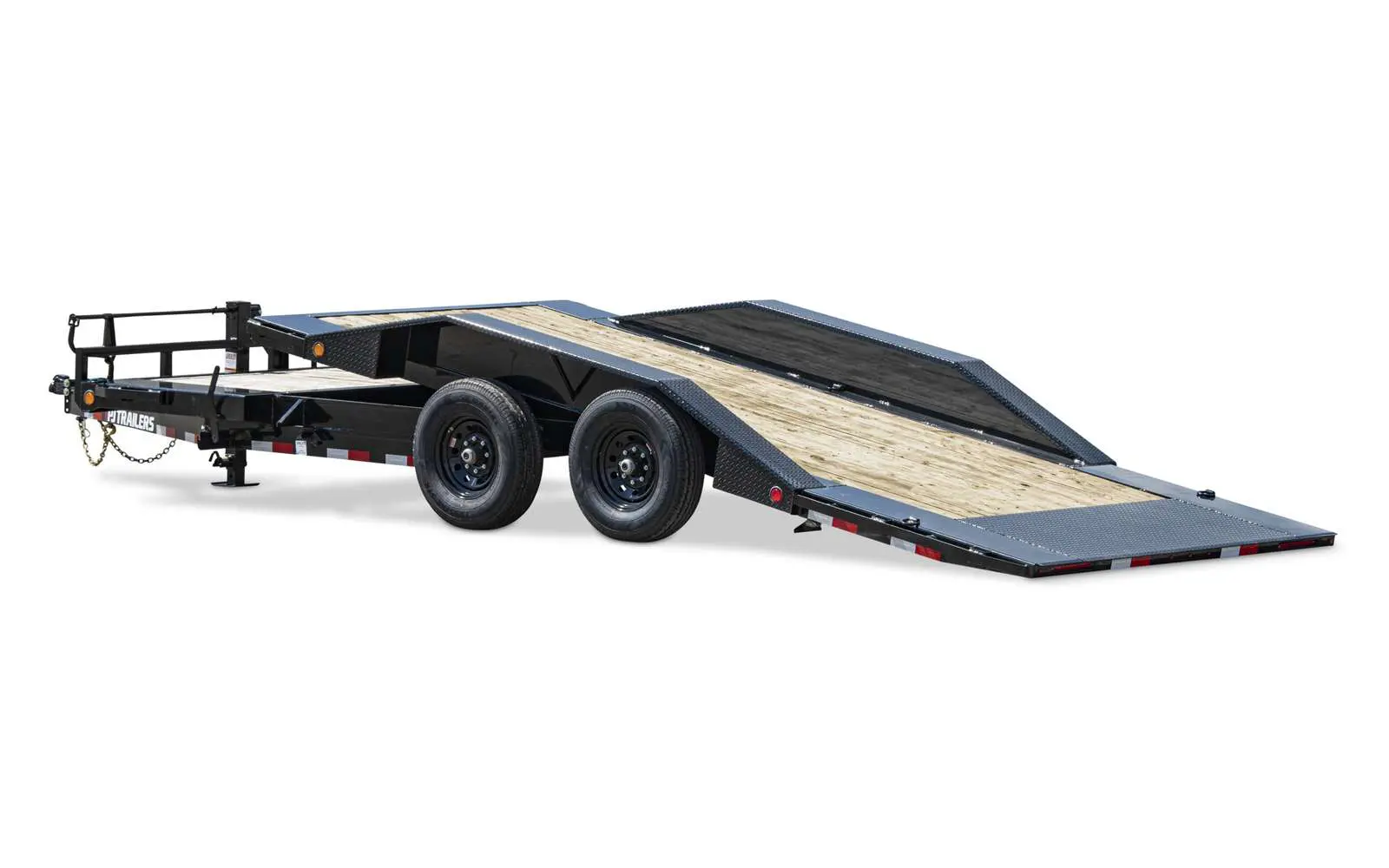
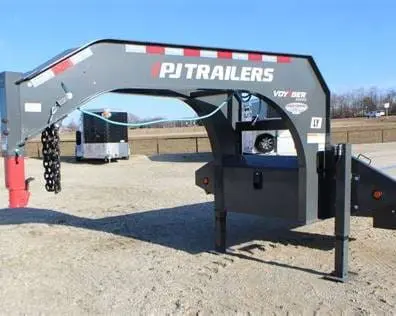
PJ's Voyager Hydraulic Dovetail Gooseneck (LY) uses a 12-foot hydraulic dovetail with a 12,000-pound loading capacity and a 12-degree ramp angle. Current models are available with a 102-inch deck in lengths from 32 to 40 feet.
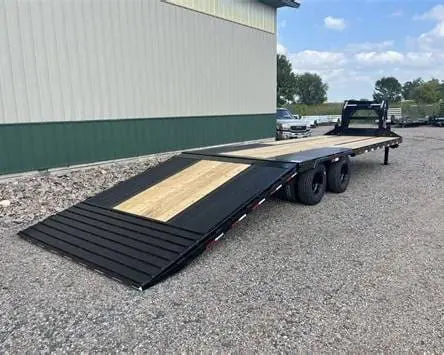
Instead of positioning separate ramps every time a machine is loaded, the hydraulic dovetail itself creates the transition between the ground and trailer.
That can be especially useful for contractors, rental companies, equipment dealers, and commercial haulers that repeatedly load skid steers, compact equipment, lifts, tractors, and other machinery.
Understanding GVWR and Payload Capacity
Two specifications every hot shot operator should understand are GVWR and payload capacity.
GVWR, or Gross Vehicle Weight Rating, represents the maximum allowable loaded weight of the trailer.
Payload capacity represents how much cargo can actually be carried after the trailer's own weight is accounted for.
Those numbers are not interchangeable.
A longer trailer typically weighs more than a shorter version of the same model. Winches, hydraulic systems, toolboxes, spare tires, additional storage, upgraded decking, and other equipment also add weight.
That means two trailers with the same GVWR can have different usable payload capacities.
For professional hauling, operators should look at the actual payload rating of the trailer configuration they are purchasing rather than relying solely on axle ratings or advertised GVWR.
Hot Shot Trailers and CDL Requirements
Commercial operators also need to understand how truck and trailer ratings affect licensing requirements.
A trailer's GVWR by itself does not determine whether an operator needs a CDL.
The original article discussed 25,900-pound trailer GVWRs in relation to CDL thresholds, but that can be misleading because commercial licensing requirements can depend on the ratings of the combined truck-and-trailer configuration, among other factors.
Truck GVWR, trailer GVWR, Gross Combination Weight Rating, cargo, commercial use, and state and federal requirements may all matter.
Anyone building a commercial hot shot setup should verify the requirements that apply to the actual truck, trailer, cargo, and operation rather than assuming that one trailer rating automatically determines CDL status.
Matching the Truck to the Hot Shot Trailer
The truck and trailer have to function as one complete towing system.
Heavy-duty pickups and chassis-cab trucks are commonly used for hot shot work, but horsepower alone does not determine whether a truck is properly matched to a trailer.
Important specifications include towing capacity, Gross Combination Weight Rating, truck payload capacity, rear axle rating, hitch capacity, loaded pin weight, tire ratings, braking capability, suspension, and cooling capacity.
A truck can have enough engine power to move a trailer while still exceeding another important manufacturer rating.
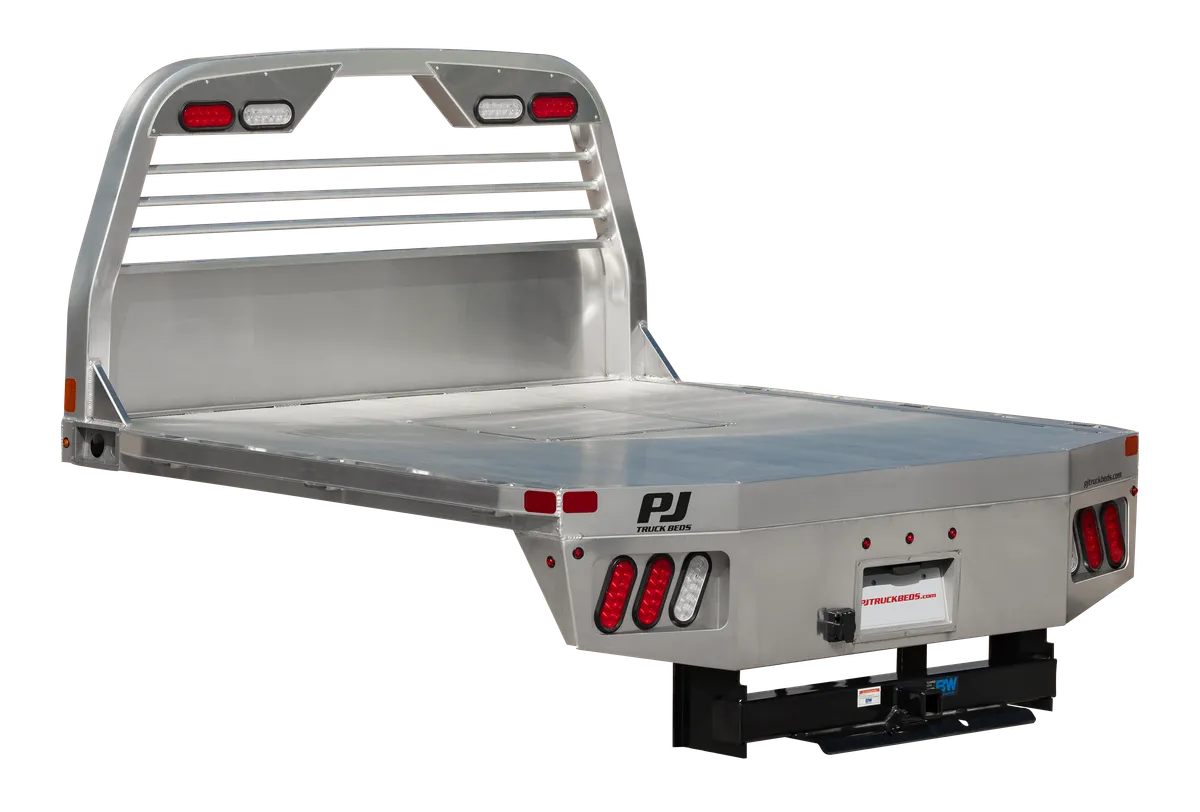
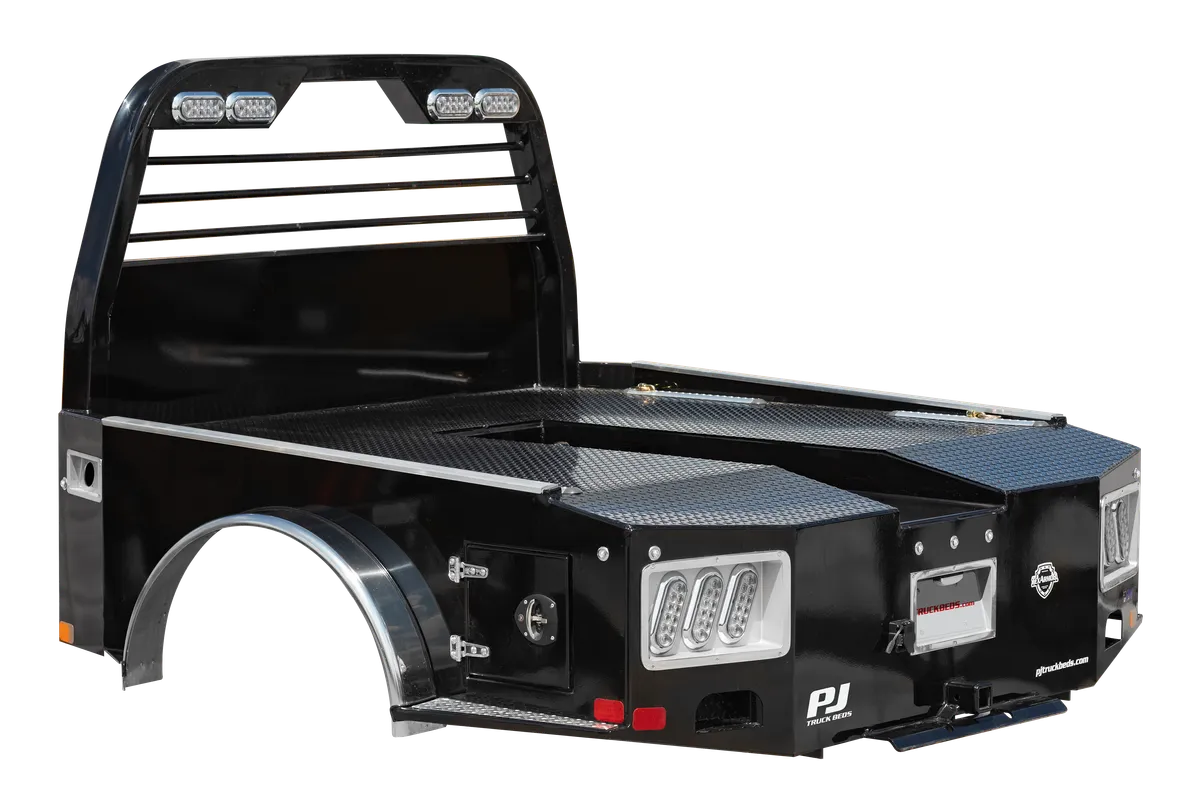
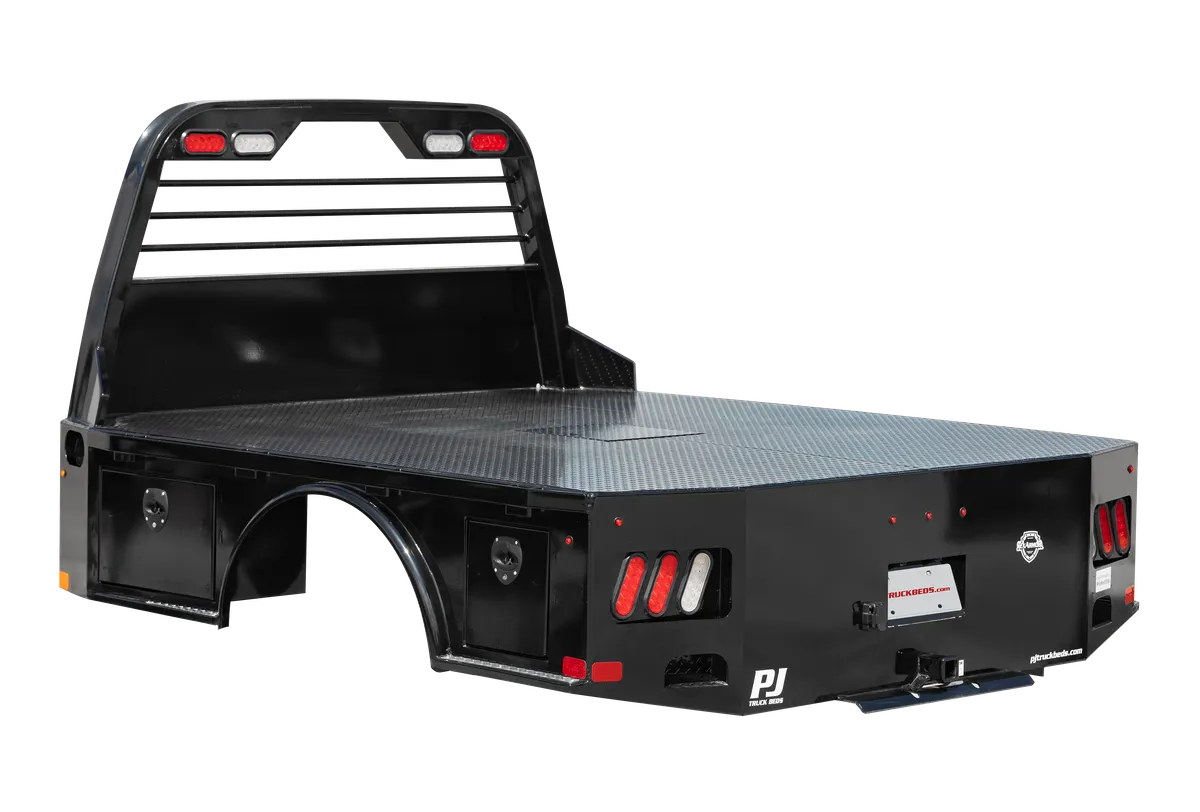
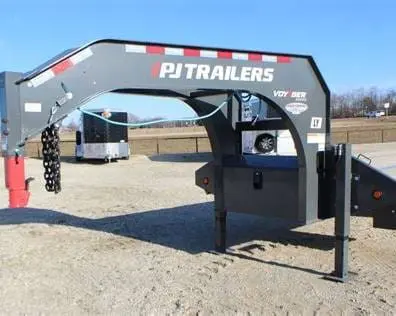
PJ even offers a dedicated Hotshot Body (GN) designed specifically around gooseneck and fifth-wheel commercial hauling. PJ currently rates the body for 30,000 pounds of gooseneck and fifth-wheel capacity.
What Makes a Commercial Hot Shot Trailer Different?
Commercial hot shot hauling can put substantially more stress on a trailer than occasional personal use.
A working trailer may travel thousands of highway miles while repeatedly being loaded, unloaded, tied down, exposed to weather, and driven through construction sites, equipment yards, farms, and industrial properties.
That continually stresses the frame, axles, suspension, brakes, wiring, decking, tires, and cargo-control equipment.
Professional operators should therefore evaluate much more than trailer length and purchase price.
Frame construction, crossmember spacing, suspension, axle design, braking system, cargo-control points, wiring protection, storage, winch provisions, deck material, and overall serviceability can all affect how practical a trailer is after thousands of miles of commercial use.
Choosing the Right PJ Trailer for Hot Shot Hauling
There is no single trailer that is best for every hot shot operator.
For heavier flatbed hauling, the PJ Low-Pro Flatdeck With Duals (LD) provides a tandem-dual configuration with lengths extending to 44 feet.
For operators who want a lower-capacity single-wheel configuration while retaining a 102-inch-wide deck, the Low-Pro Flatdeck With 8K Singles (LX) provides another option.
For businesses frequently loading machinery, the Voyager Hydraulic Dovetail Gooseneck (LY) provides an integrated hydraulic loading system.
PJ also notes that 40 feet is the most common deck length for gooseneck hot shot trailers, although longer or shorter trailers may make more sense depending on freight, operating conditions, and applicable laws.
Before choosing a trailer, compare deck dimensions, empty weight, payload capacity, GVWR, axle configuration, braking system, deck height, loading method, cargo-control options, storage, and tow-vehicle compatibility.
The best trailer is not necessarily the largest. It is the trailer that is properly matched to the loads and working conditions the operator encounters every day.
Find a PJ Hot Shot Trailer
Hot shot hauling gives contractors, equipment operators, businesses, and independent haulers a flexible way to move commercial freight without relying on a full tractor-trailer for every shipment.
A properly configured gooseneck trailer can provide the deck space, cargo capacity, loading flexibility, and durability required to transport equipment, materials, vehicles, and time-sensitive freight efficiently.
You can compare PJ's available gooseneck deckover trailers or use the PJ Trailers dealer locator to find trailers available near you.
Frequently Asked Questions
What is a hot shot trailer?
A hot shot trailer is generally a heavy-duty flatbed or equipment trailer pulled by a pickup or medium-duty truck to transport commercial freight, machinery, vehicles, equipment, and materials. Long gooseneck flatbeds are especially common for professional hot shot operations.
What size trailer is best for hot shot trucking?
It depends on the freight being hauled, but long gooseneck flatbeds are common because they provide more usable deck space. PJ says 40 feet is the most common deck length for gooseneck hot shot trailers.
Is hot shot trucking the same as LTL freight?
No. The two overlap because both can involve loads smaller than a full tractor-trailer shipment. Traditional LTL carriers commonly consolidate freight from several customers, while hot shot transportation is often more direct and dedicated to a particular load.
Are gooseneck trailers good for hot shot trucking?
Yes. Gooseneck flatbeds are widely used for hot shot hauling because they can provide long decks, substantial cargo capacity, and a hitch configuration designed for heavy-duty pickup-based towing.
Which PJ trailer is best for hot shot hauling?
It depends on the job. The LD is a strong option for heavier tandem-dual flatbed hauling, the LX provides a lower-capacity single-wheel setup, and the LY Voyager adds a hydraulic dovetail for frequent equipment loading.