
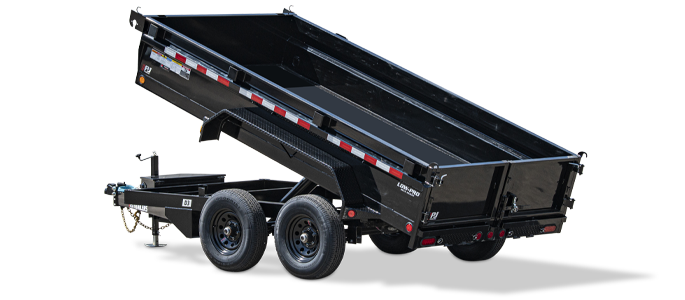
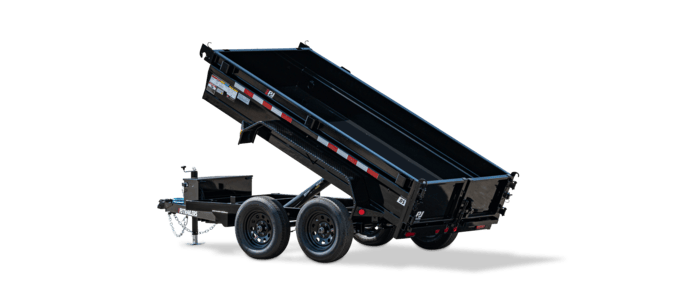
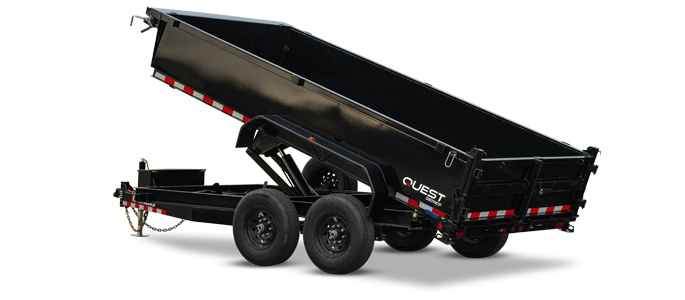
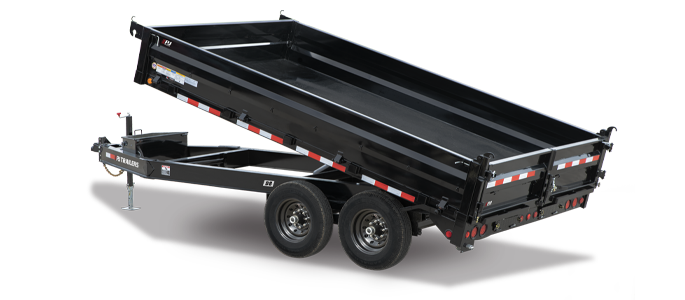
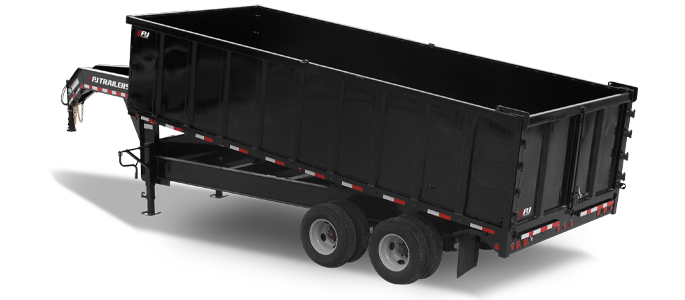
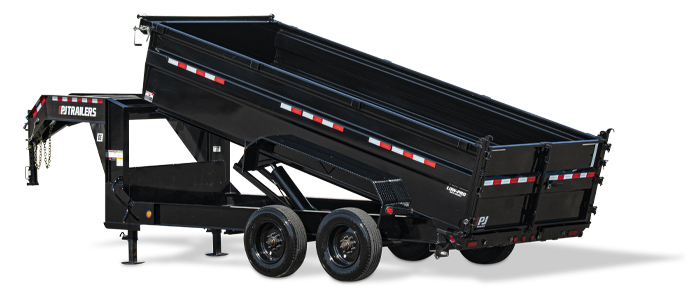
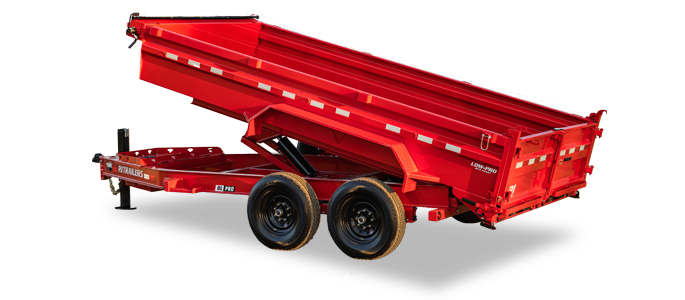
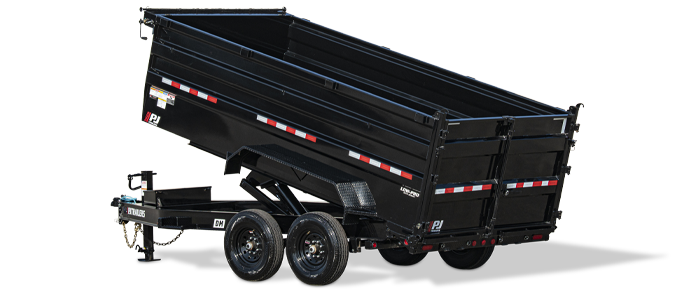
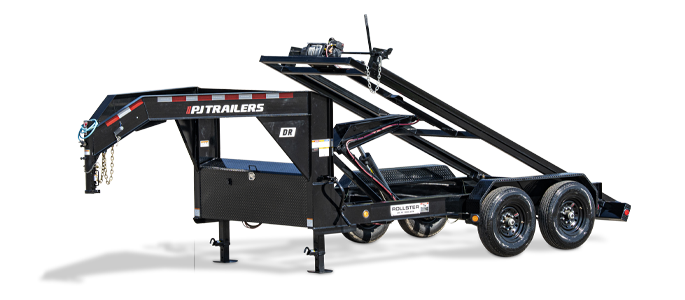
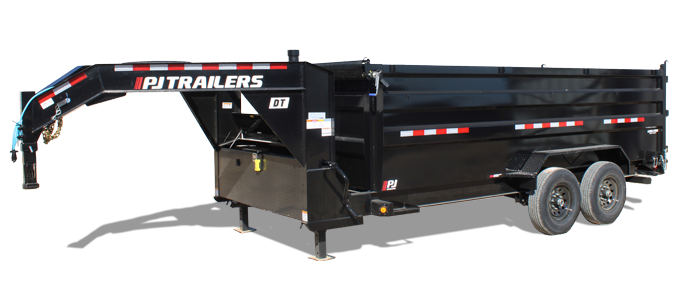
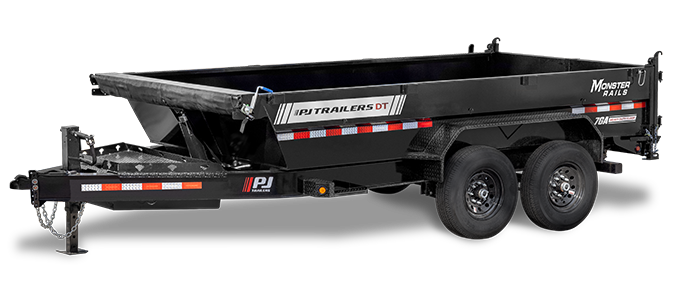
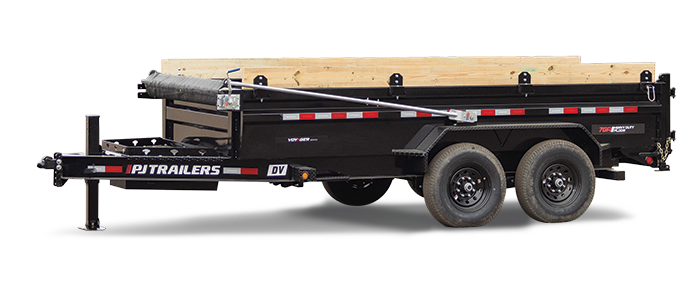

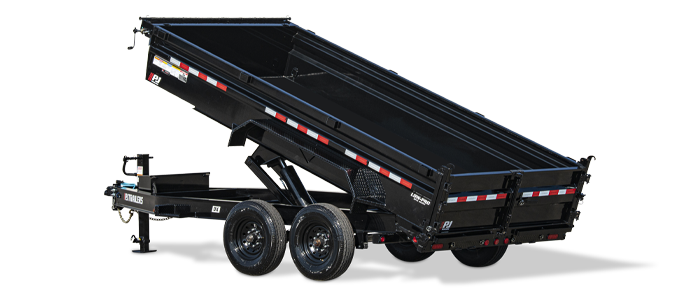
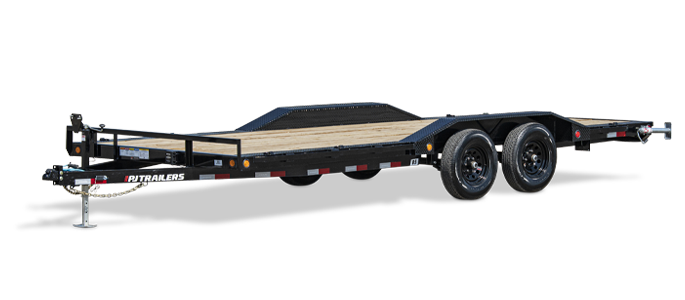
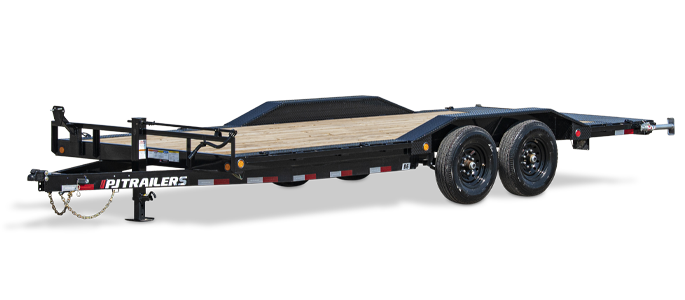
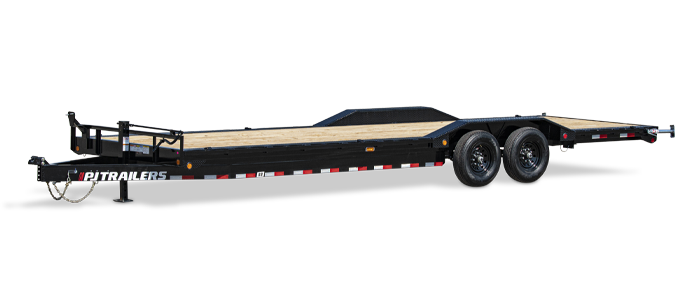
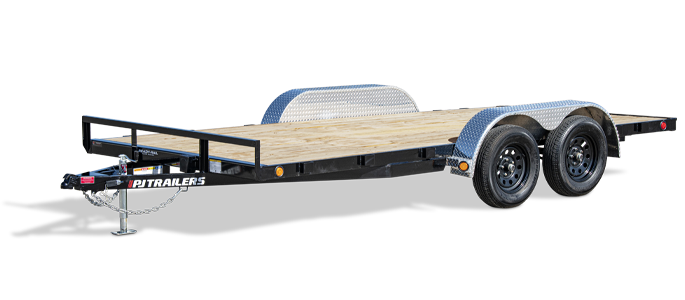
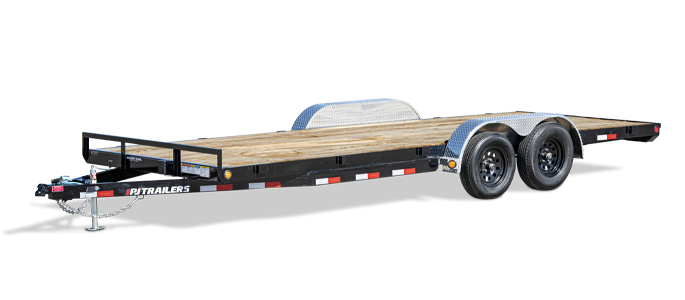
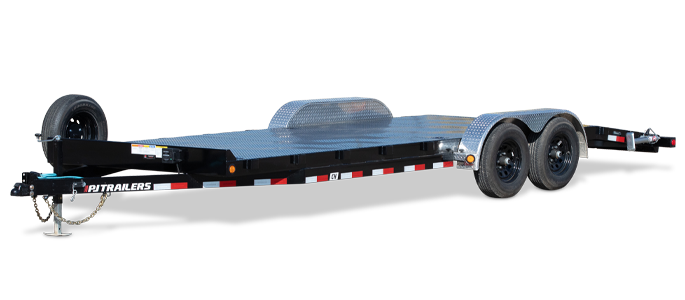
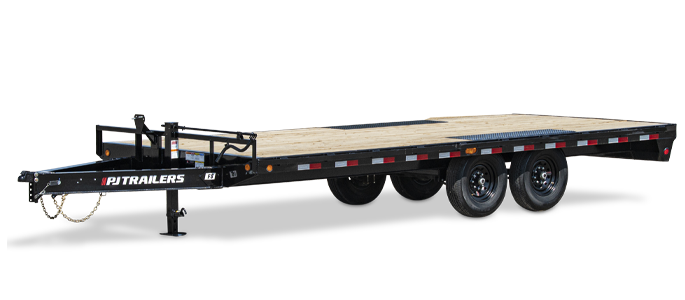
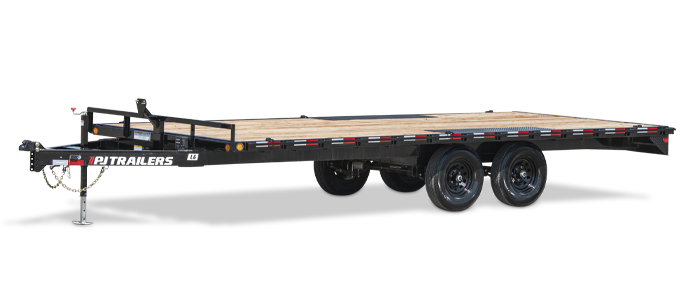
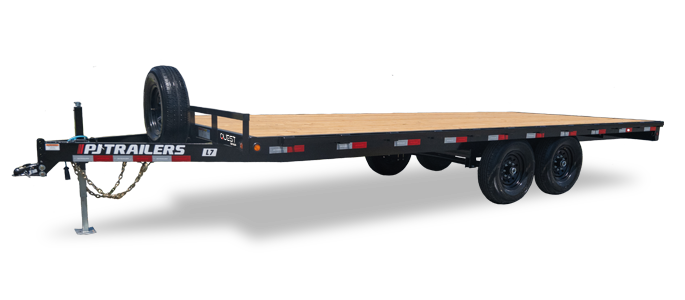
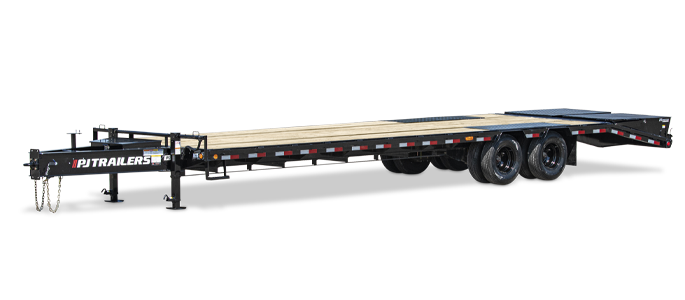
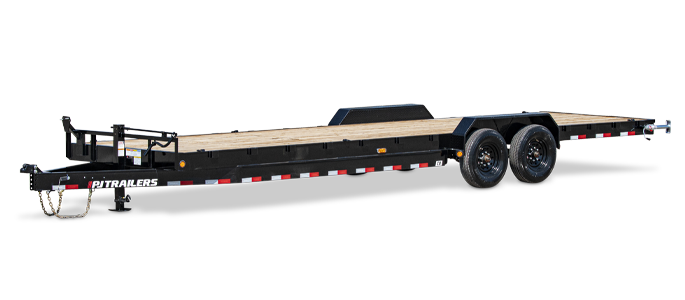
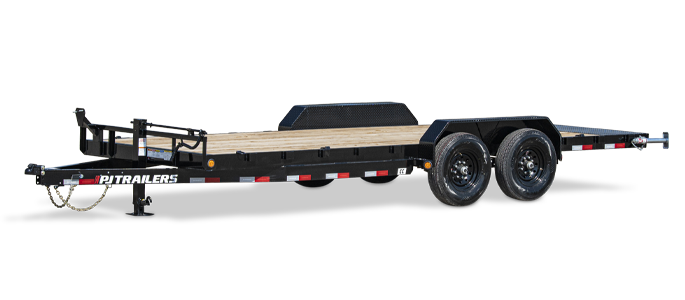
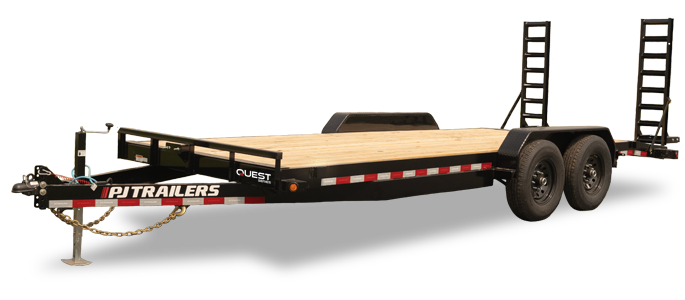
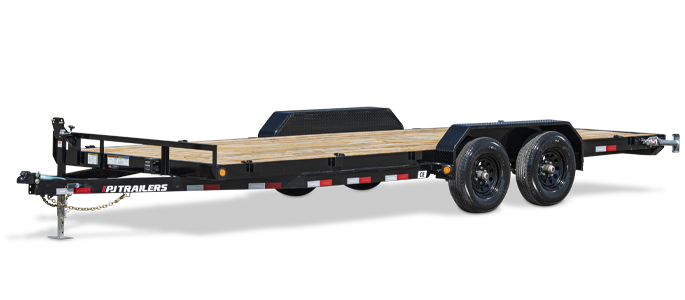
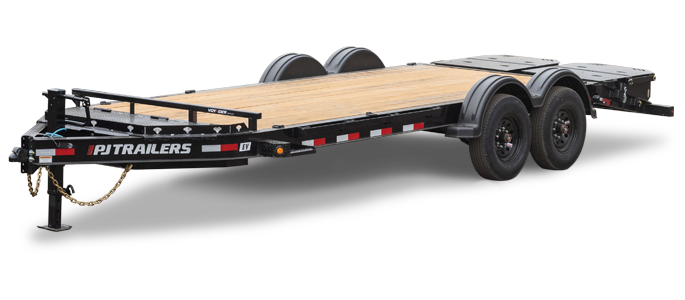
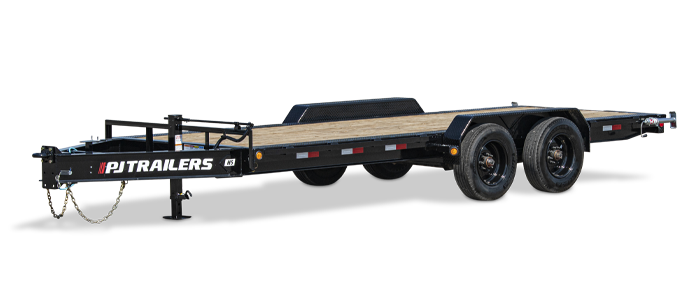
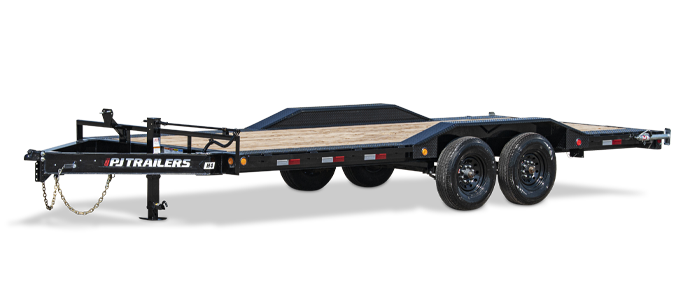
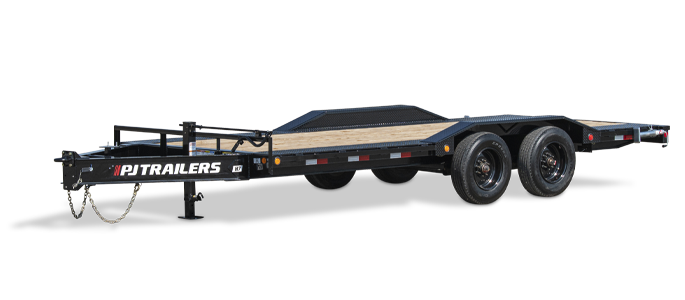
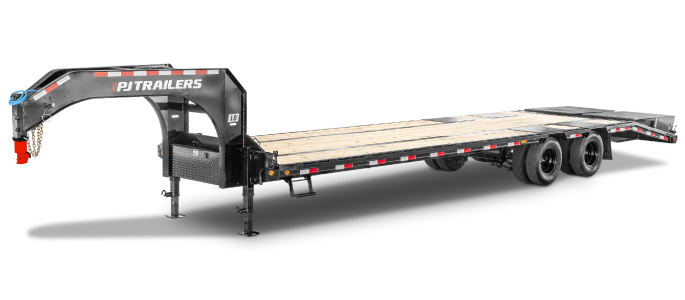
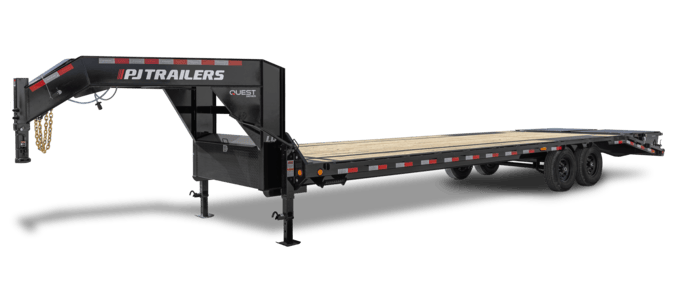
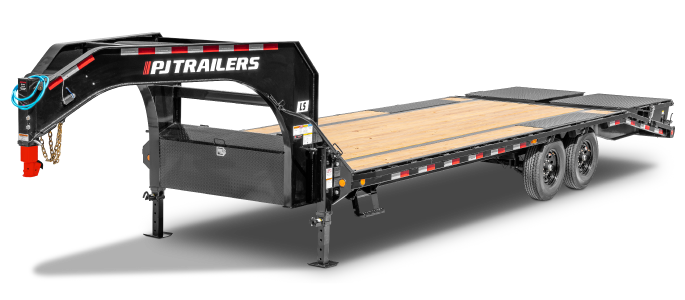
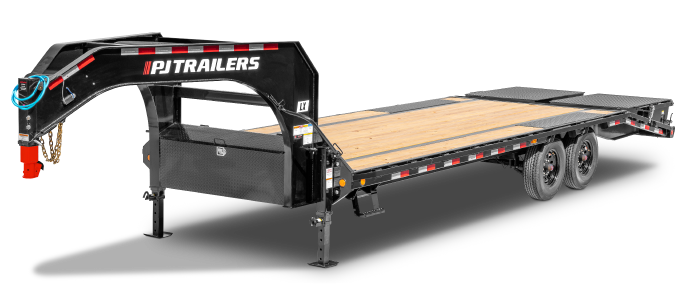
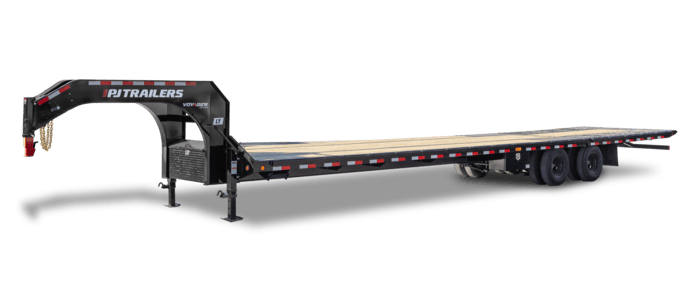
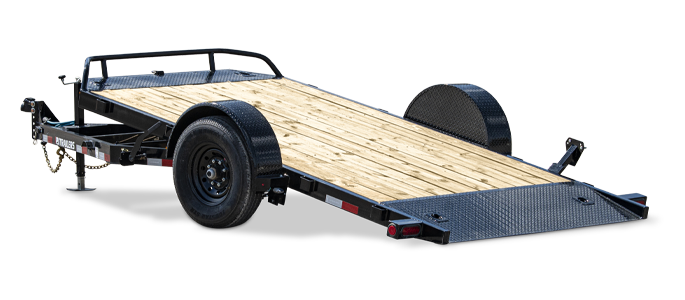
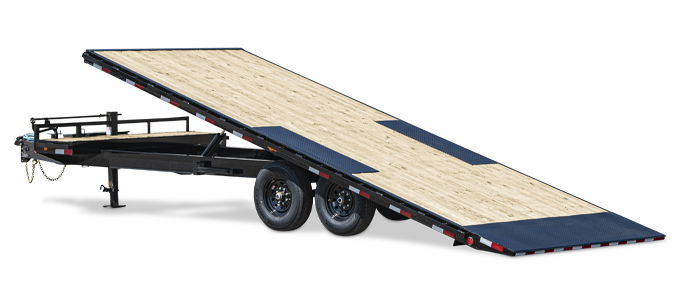
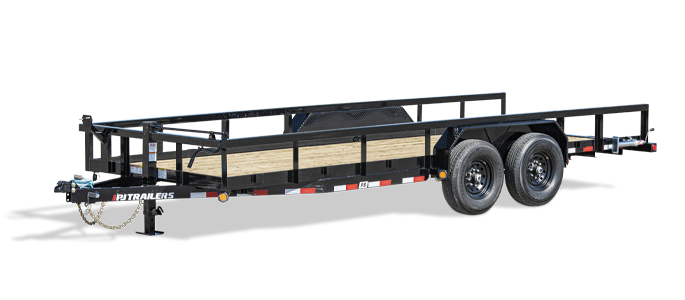
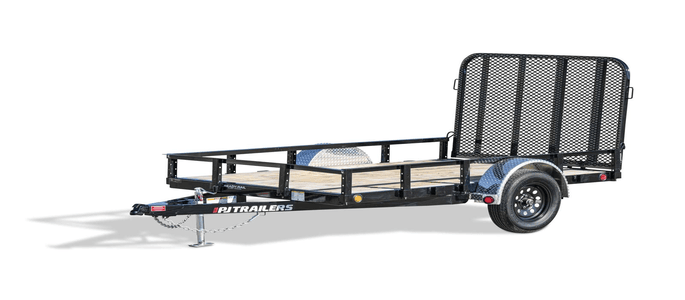
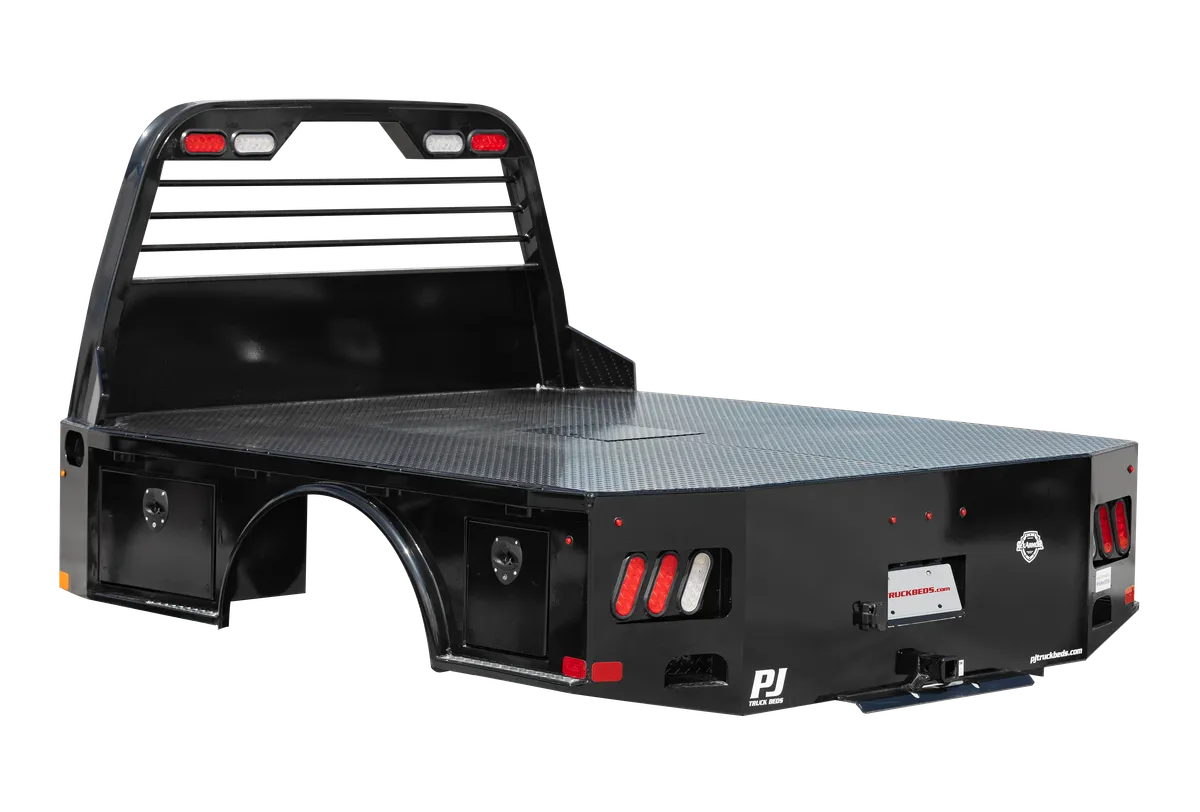
No ramps needed— it starts with PJ Trailers' premium tilt trailers. Hydraulic cylinders provide smooth, controlled tilting, while the optimized deck design reduces load angles for safer operation. Available in multiple configurations, including single-axle and gooseneck models, these trailers handle loads from 5,200 to 28,000 lbs. Built for versatility, they transport everything from heavy equipment and machinery to vehicles and construction materials. Durable materials ensure stability on rough terrain, cutting costs by eliminating extra loading equipment. A tilt trailer is a smart investment that boosts efficiency, reduces hassle, and delivers lasting value.
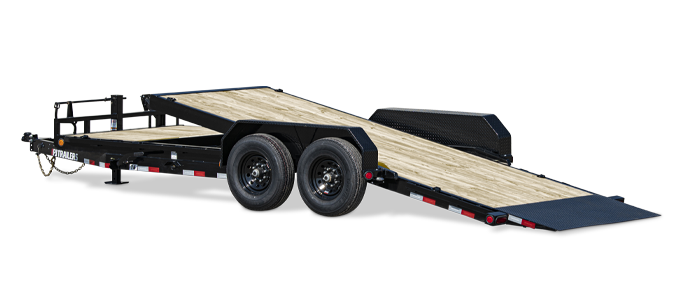
6" Channel Equipment Tilt (T6)
16 – 24' Lengths
83" Deck Width
14,000 lbs GVWR
10,940—11,730 lbs Load Capacity
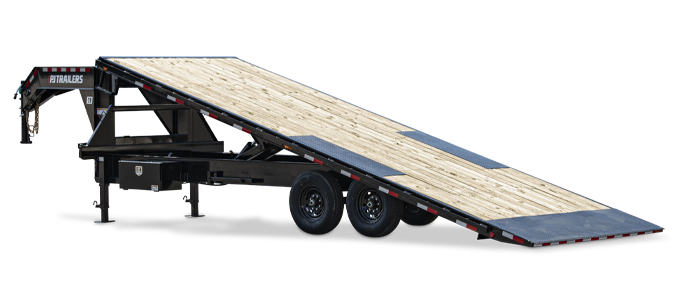
HD Deckover Tilt (T9)
24 – 30' Lengths
102" Deck Width
15,680 lbs GVWR
9,540—17,320 lbs Load Capacity
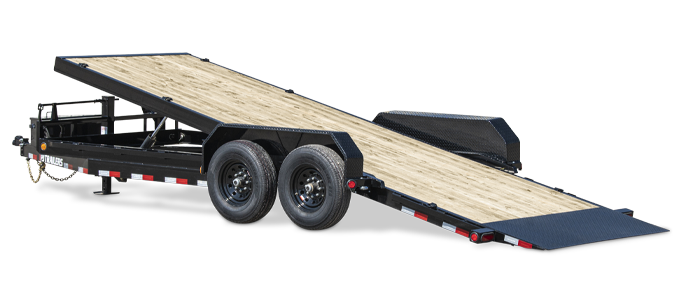
Powered Full Tilt (TF)
18 – 24' Lengths
83" Deck Width
14,000 lbs GVWR
9,420—10,080 lbs Load Capacity
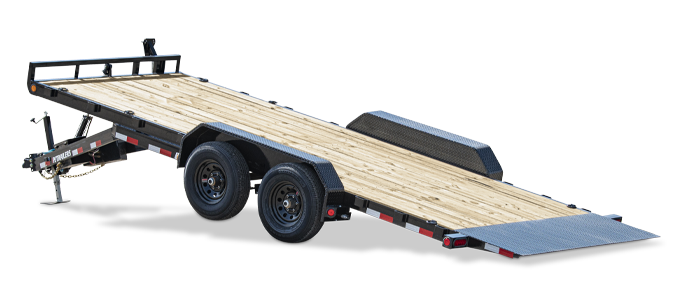
83" Hydraulic Quick Tilt (TH)
18 – 22' Lengths
83" Deck Width
10,000 lbs GVWR
7,300—7,500 lbs Load Capacity
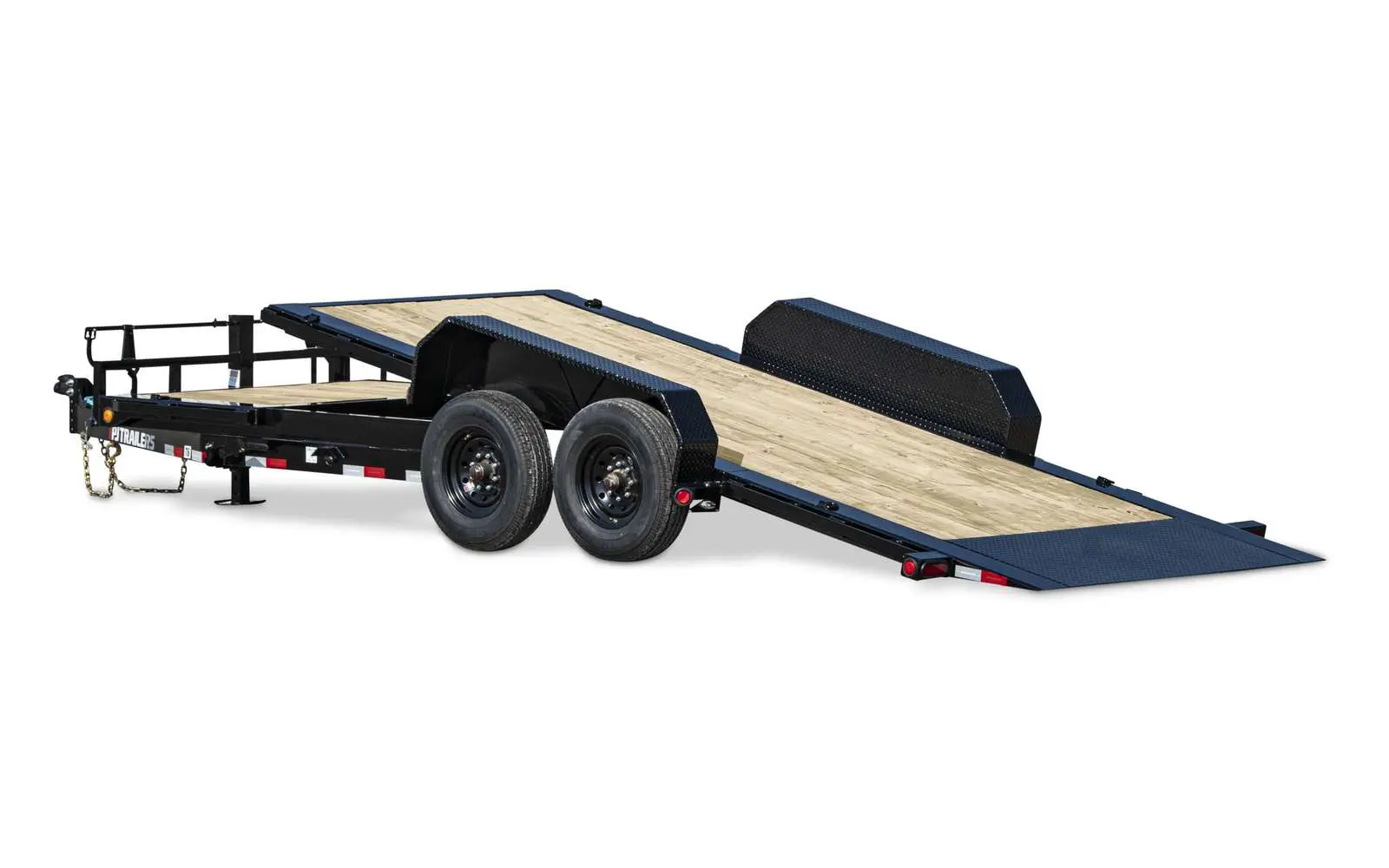
HD Equipment Tilt 6" Channel (TJ)
20 – 24' Lengths
82" Deck Width
16,000 lbs GVWR
11,520—12,000 lbs Load Capacity
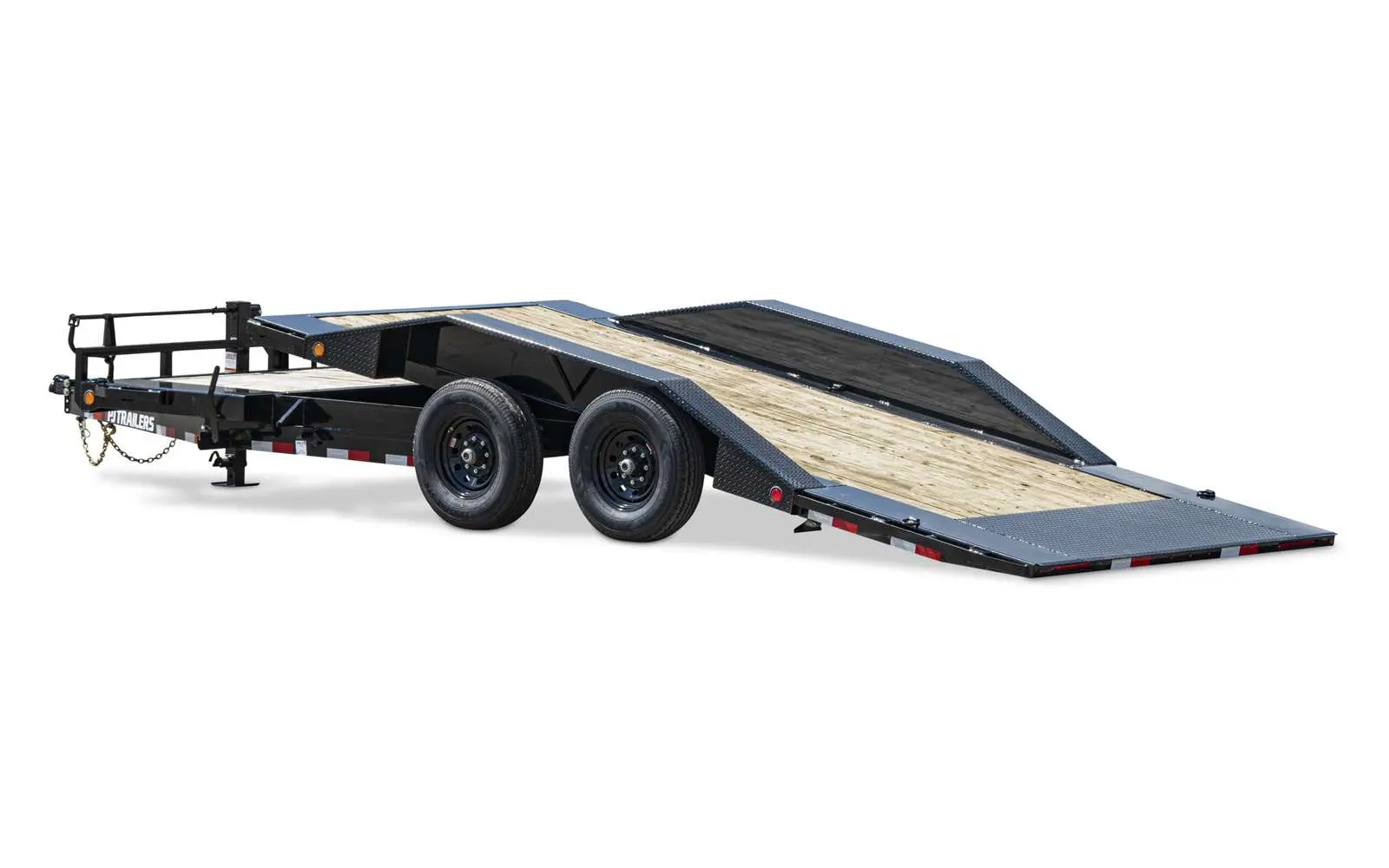
6" Channel Super-Wide Tilt (TS)
20 – 24' Lengths
102" Deck Width
14,000 lbs GVWR
10,080—11,100 lbs Load Capacity
New!
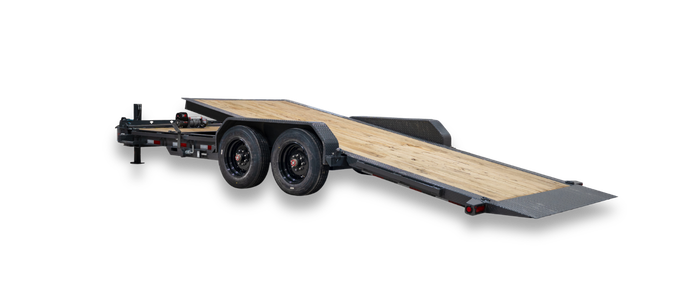
8" I-Beam Equipment Tilt (TY)
20 – 24' Lengths
83" Deck Width
15,400 lbs GVWR
10,900—11,200 lbs Load Capacity



Tilt Trailer Features
Known for their versatility, durability, and design, our tilt trailers are loaded with great features and benefits.
Our car hauler tilt tails have a knife-edge design that makes them perfect for loading and unloading scissor or fork lifts—laying flush to the ground and eliminating the bump other tilts have to drive over. This is useful when loading equipment with small wheels, winching vehicles onto the deck, or dealing with slippery conditions.
Radial tires feature better fuel economy, less vibration, a softer ride, and extended life due to less heat being generated by the tire.
Our tilt trailers include a Bulldog™ coupler as a standard feature. They’re height adjustable and allow you to level the trailer with the towing vehicle.
Tougher than the typical smooth plate while still looking stunning, our fenders are made of 14-gauge diamond plate steel for increased durability. Plus, they can be easily removed for off-road use or replacement.
Our gravity tilt bed trailers use a hydraulic cylinder, reservoir, and proportioning valve to control the rate the trailer tilts.
Using both torsion axles and frame design to keep our deck heights as low as possible, we achieve lower load angles that allow you to haul a greater variety of equipment and vehicles.
We add grease zerks to just about everything that can move and needs grease, ensuring our trailers provide years of reliable service.
Our standard 2″ x 3/8″ rub rail includes both stake pockets and pipe spools on 12″ centers—giving you almost unlimited tie down points while also strengthening the rub rail.
Note: The TH includes stake pockets but not the rub rail
Every one of our tilt deck trailers features Lifetime LED tail lights standard (model year 2017 & newer) with a lifetime warranty. LED lights are brighter, faster, draw less current, and last longer than incandescent lights.
Our tilt trailers use a wiring harness that’s enclosed in steel conduit throughout the frame of the trailer to protect wiring from ice, road debris, and physical damage. Plus, each light is simply plugged in and makes replacement easy.
Flush mounted lights inside the frame protects them from damage and debris—keeping your tilt bed trailer legal and safe for whatever adventures you go on.
Our tilt trailers are built in compliance with the National Association of Trailer Manufacturers trailer safety regulations.
For a tilt trailer that lasts, it has to be built on a solid foundation. Our trailers take frame strength to the next level—and we have the warranty to prove it.
We fabricate many of our frame components on CNC plasma tables. Enabling us to create superior components, it gives us the ability to customize the exact component we need for each model to make sure your trailer is built to the quality you demand.
You’ve got an endless list of goals to achieve, and we don’t believe you should settle for a trailer that isn’t what you need to chase your dreams. That’s why we offer a wide variety of options, including steel floors, deck on the neck, winch plates, hydraulic jacks, all-weather wiring harness, and more.
Fully enclosing and protecting wiring and lights from debris and the elements, our outside frame is made of 6″ x 2″ rectangular tubing—not channel.
Every one of our flatdeck and deckover trailers is wired with a weatherproof junction box to keep wiring clean and protected from the elements.
Our 30 foot and longer gooseneck trailers are standard with under frame bridging. This 2″ x 3/8″ flat spans the bottom of the trailer frame and minimizes frame sag under heavy loads.
Our deckover tilt trailers come standard with a front locking toolbox made of steel diamond plate, and it also includes a chain rack.
Our riser gussets and formed front bumper are signature features of our trailers—adding considerable strength while also helping protect your cargo and frame.
Our deckover tilt trailers are equipped with two drop leg jacks that are spring loaded, saving you time and energy.
Every one of our deckover tilt trailers is equipped with an Interstate deep cycle battery—designed to be deeply discharged repeatedly, unlike an automotive battery.
Why Choose A Tilt Trailer
Tilt trailers simplify loading by allowing the deck to angle toward the ground, eliminating the need to position separate loading ramps. Depending on the model, gravity-assisted or powered hydraulic systems control deck movement. This design can reduce setup time and physical effort, especially when you load and unload equipment at multiple stops throughout the day.
Common Uses For Tilt Trailers
Tilt trailers are commonly used to transport compact machinery, landscaping equipment, and vehicles. Construction crews can move equipment between jobsites, while landscapers can load mowers and compact loaders for daily work. The right trailer depends on the equipment’s weight, dimensions, and ground clearance, along with the deck’s loading angle.
Tilt Trailers vs Standard Equipment Trailers
Both trailer styles can handle equipment transport, but their loading methods suit different workflows. A tilt trailer uses an angled deck for loading, while a standard equipment trailer typically uses ramps. Consider how frequently you load, the equipment you carry, and whether you need part of the deck to remain stationary.
Tilt Trailers
Tilt trailers are a practical choice for wheeled or tracked equipment that you load and unload frequently. The tilting deck removes the task of handling separate ramps and provides a continuous loading surface. Check the loading angle and transition onto the deck to make sure they suit your equipment’s ground clearance.
Standard Equipment Trailers
Standard equipment trailers offer a fixed deck with ramp-based loading, making them a practical option for machinery, attachments, and mixed loads. The stationary deck allows cargo to stay in place while other equipment is loaded using the ramps. Compare equipment trailer options based on deck dimensions, ramp design, and payload capacity.
How To Choose The Right Tilt Trailer
Start with the equipment you haul most often and the loading conditions you encounter. Deck dimensions, payload capacity, tilt configuration, and towing compatibility should all fit your workload. Choosing the right combination helps make loading easier while providing enough room to position and secure your cargo.
Type Of Equipment
Check your equipment’s length, width, and ground clearance, including attachments such as buckets or mower decks. Low-clearance equipment may need a gentler loading angle to avoid scraping during the transition. Make sure the usable deck space and tie-down locations allow you to position and secure the entire load.
Weight Capacity
Add up the weight of your equipment, attachments, tools, and any materials traveling on the trailer. Compare that total with the trailer’s payload rating, keeping in mind that GVWR includes the trailer’s own weight. Your truck and hitch must also be rated for the loaded trailer and the weight it transfers to the truck.
Tilt Style
A full-tilt trailer angles the entire main deck for loading, while a partial-tilt trailer combines a tilting section with a stationary section. A stationary area can be useful for carrying attachments or materials while loading machinery. Also consider whether gravity-assisted or powered hydraulic operation better suits your equipment and loading routine.
Frequency Of Use
If you load and unload several times a day, reducing ramp handling can save time and effort at each stop. Consider how easy the tilt controls, tie-down points, and other frequently used components are to access. For regular vehicle transport, compare car hauler trailers to find a configuration suited to your vehicles.
Make Loading Faster And Easier
A well-matched tilt trailer can streamline equipment transport from the first pickup to the final unload. Choose a model with the capacity, deck space, and tilt system your workload requires to make everyday hauling more efficient.
Tilt Trailer FAQs
A tilt trailer has a deck that angles toward the ground, creating a loading surface without separate ramps. Depending on the model, the deck uses gravity-assisted or powered hydraulic operation to tilt and return to its transport position. This design simplifies loading for compatible equipment and vehicles.
Tilt trailers can be more convenient for frequent loading because they eliminate the need to position and store separate ramps. However, the best choice depends on your equipment’s ground clearance, the loading angle, and how you carry additional cargo. Ramp-equipped trailers remain a practical option for many hauling jobs.
Our tilt trailers include a Bulldog™ coupler as a standard feature. They’re height adjustable and allow you to level the trailer with the towing vehicle.
Yes. In addition to routine tire, brake, wheel bearing, and lighting checks, tilt trailers need attention to their pivot points, latches, and hydraulic components where equipped. Inspect hoses and cylinders for leaks, lubricate moving parts as specified, and follow the manufacturer’s maintenance schedule to keep the tilt mechanism operating reliably.