
Understanding Trailer Tongue Weight: Its Measurement and More
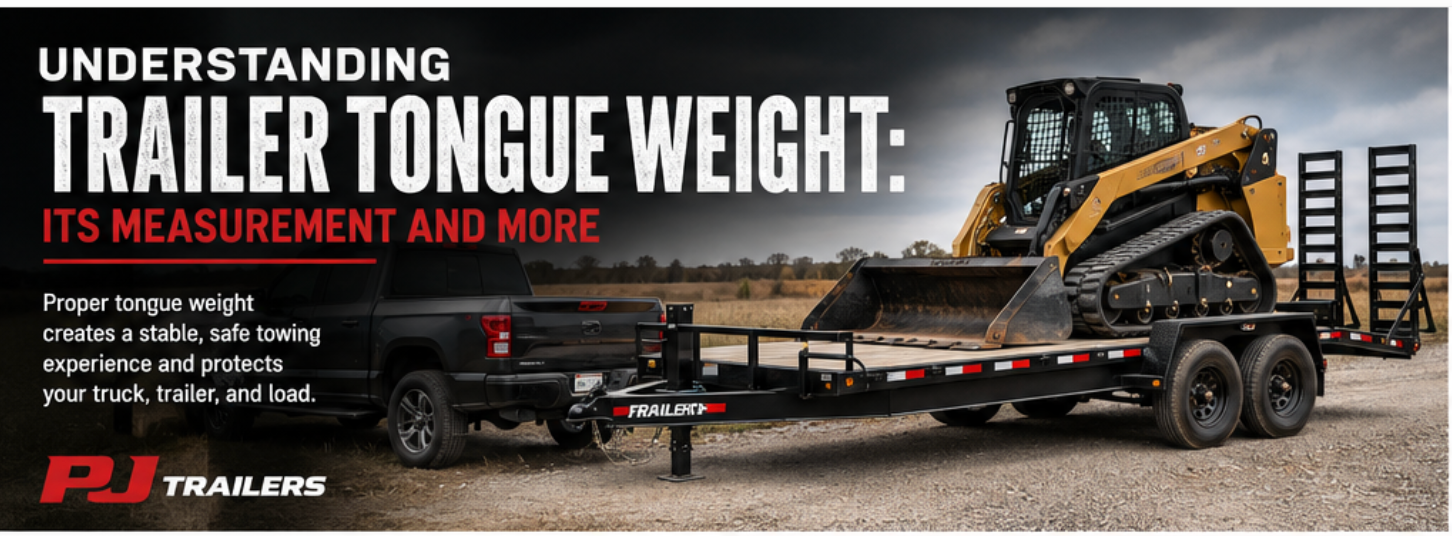
Most trailer towing problems do not start with the trailer itself. They start with weight distribution.
A trailer can have the correct GVWR, sufficient axle capacity, and a properly rated tow vehicle, but if the trailer tongue weight is wrong, the entire setup becomes unstable. Experienced operators recognize this quickly because improper tongue weight altersa trailer’s behavior long before a mechanical failure occurs.
That is why understanding trailer tongue weight may determine whether you are hauling compact equipment, pallets of material, or heavier commercial machinery. Proper balance affects steering response, braking performance, tire wear, and towing stability at highway speeds.
At PJ Trailers, we build equipment for operators who depend on consistent towing performance every day. The right trailer setup is not only about capacity. It is about how the entire load behaves under real-world conditions.
What Trailer Tongue Weight Actually Means 
Trailer tongue weight is the amount of downward force the trailer tongue applies to the hitch of the tow vehicle.
In practical terms, it is how much weight is transferred forward from the trailer onto the truck.
This number matters because too little tongue weight creates instability, while too much overloads the rear suspension and affects steering and braking control.
Most bumper-pull trailers perform best when the trailer tongue weight falls within roughly 10-15% of the total loaded trailer weight. Go significantly outside that range, and towing behavior changes quickly.
For example:
- Insufficient tongue weight often causes trailer sway.
- Excessive tongue weight can reduce steering responsiveness.
- Uneven loading increases stress on tires and suspension.
These issues become more noticeable at highway speeds or in crosswinds.
Why Proper Weight Distribution Matters
Many first-time trailer owners focus on whether the equipment physically fits on the trailer deck. Experienced haulers focus on where the weight sits.
A compact tractor loaded too far rearward may technically fit the trailer, but it creates unsafe towing conditions. The same applies to skid steers, pallets, side-by-sides, or attachments placed behind the trailer axles.
Proper trailer tongue weight improves:
- Towing stability
- Braking consistency
- Steering control
- Tire wear patterns
- Suspension performance
It also reduces stress on the trailer frame and hitch system over time.
This becomes especially important when hauling heavier commercial equipment, in which case small changes in placement can significantly affect balance.
How To Measure Trailer Tongue Weight
There are several ways to measure tongue weight depending on trailer size and load type.
Tongue Weight Scale
The most accurate method is using a dedicated tongue weight scale placed directly under the coupler.
This is common for operators who tow frequently or regularly adjust equipment configurations.
Public Vehicle Scale
Commercial operators often use certified vehicle scales to compare axle weights before and after connecting the trailer.
This method is especially useful when working with larger trailers or heavier payloads.
Trailer Jack and Scale Method
For smaller trailers, some operators use a standard scale combined with a jack stand or pipe setup to estimate tongue weight safely.
Regardless of method, the goal is consistency. Measuring actual tongue weight removes guesswork and helps prevent improper loading habits.
Trailer Size and Capacity Change The Equation
As trailers increase in size and payload capability, tongue weight becomes more important.
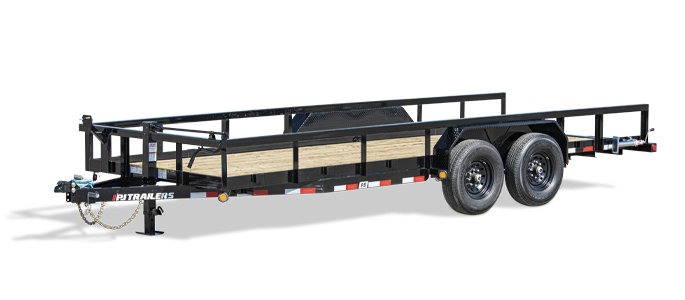
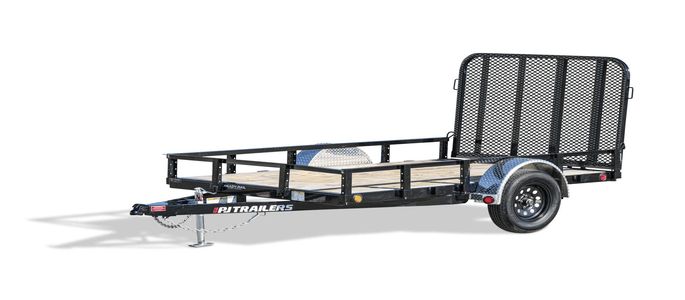
A small utility trailer carrying lawn equipment reacts very differently from a tandem axle equipment trailer carrying compact machinery. Higher payloads magnify balance issues quickly.
Understanding the overall trailer weight capacity helps operators recognize how cargo placement affects not just payload limits but also towing behavior.
For example, a trailer operating comfortably within its GVWR can still tow poorly if the tongue weight is incorrect. Capacity alone does not guarantee stability.
This is why professional operators think about:
- Payload distribution
- Axle placement
- Attachment positioning
- Fuel and accessory weight
- Tie-down location
All of these influence tongue weight in real-world hauling situations.
Heavy Equipment Requires More Attention To Balance
Heavier loads amplify mistakes.
Operators hauling machinery with a heavy equipment trailer often discover that even small adjustments in load position dramatically change towing feel.
A skid steer moved forward six inches may eliminate sway completely. A tractor attachment positioned too far rearward may create instability even though the trailer remains under capacity.
This is why experienced haulers load equipment intentionally rather than simply driving it onto the deck and securing it where it stops.
Longer trailers help because they provide more flexibility for positioning equipment correctly over the axles while maintaining appropriate tongue weight.
Signs Your Tongue Weight Is Incorrect
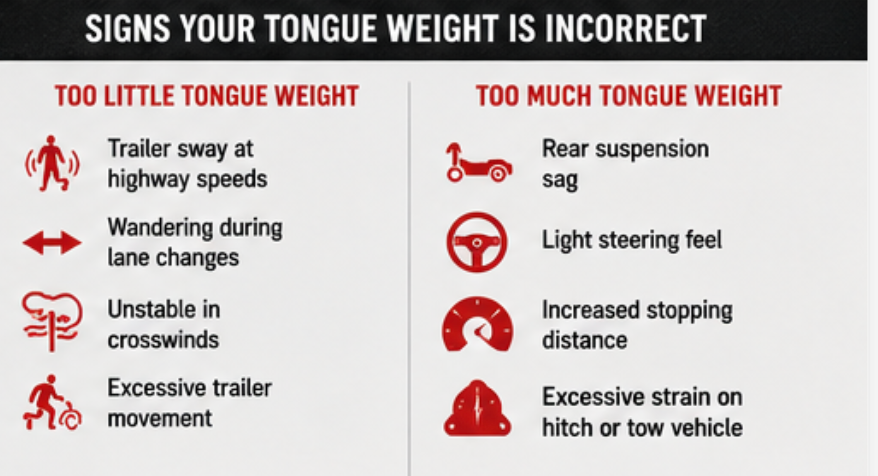
Most towing setups communicate balance problems clearly once you know what to watch for.
Signs of Too Little Tongue Weight
- Trailer sway at highway speeds
- Wandering during lane changes
- Unstable feel in crosswinds
- Excessive trailer movement behind the truck
Signs of Too Much Tongue Weight
- Rear suspension sag
- Light steering feel
- Increased stopping distance
- Excessive strain on the hitch or tow vehicle
Ignoring these symptoms increases wear on both the trailer and the truck.
Common Tongue Weight Mistakes
Even experienced operators occasionally create balance issues when equipment changes.
The most common mistakes include:
- Loading equipment too far rearward
- Assuming weight is evenly distributed
- Failing to account for attachments or cargo shifts
- Overloading the rear of the tow vehicle
- Relying on visual estimates instead of measurements
The safest setups are usually the ones that feel stable and predictable rather than operating at the edge of the vehicle’s capability.
Why PJ Trailers Focuses On Real-World Towing Performance
At PJ Trailers, we build trailers for operators who depend on them daily in construction, agriculture, landscaping, and equipment transport.
That means designing trailers with:
- Balanced axle placement
- Reinforced frames
- Stable towing characteristics
- Durable suspension systems
A well-built trailer should not only carry the load. It should distribute that load predictably and tow with confidence over time.
The right trailer tongue weight setup protects more than the trailer itself. It protects uptime, equipment, and driver confidence.
Frequently Asked Questions
FAQ
What Is Ideal Trailer Tongue Weight?
Most bumper-pull trailers perform best with tongue weight around 10-15% of total loaded trailer weight.
Does Tongue Weight Affect Trailer Sway?
Yes. Insufficient tongue weight is one of the most common causes of trailer sway at higher speeds.
Can A Trailer Be Under GVWR But Still Unsafe?
Absolutely. Improper weight distribution can create unstable towing conditions even if total weight remains under capacity limits.
How Often Should Tongue Weight Be Checked?
Any time cargo changes significantly, equipment is repositioned, or towing performance feels different.
Why Does Equipment Placement Matter So Much?
Even small changes in load position alter how weight transfers onto the hitch and axles, which directly affects towing stability.
Built For Stable Towing
Proper towing starts with proper balance.
Understanding trailer tongue weight helps you load equipment more safely, reduce wear on your truck and trailer, and maintain control in real-world conditions.
The best towing setups are not the ones operating at their limits. They are the ones that feel stable, predictable, and controlled every mile of the haul.